Commercial · Baltimore, MD

Commercial Concrete Repair in Baltimore

Address concrete damage affecting your commercial property. Baltimore’s Concrete offers repair and replacement discussions for damaged surfaces, with property access and use considered alongside the condition.

How this service can help
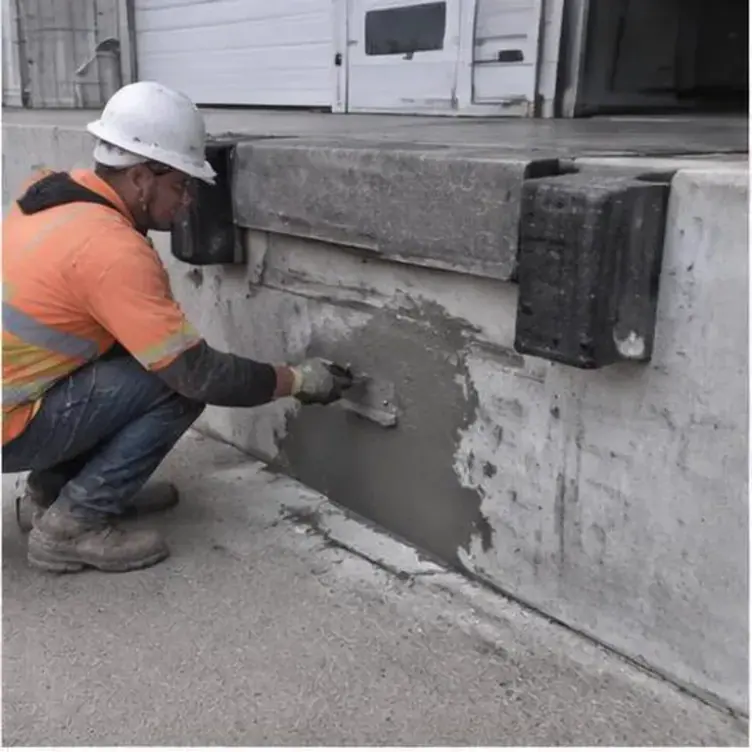
Repairing a damaged concrete wall surface

Address damaged concrete without losing sight of operations

Cracked paths, broken edges and uneven slabs can get in the way of daily use. Baltimore’s Concrete offers commercial concrete repair. We can discuss the damage, how people use the area and what needs to stay open while the work is done.

Show us the damage and the routes it affects. Shoppers, tenants, trucks and service crews may all use the space in different ways. Send close-ups and wider views, along with details of past repairs. This helps you compare a local repair with lifting a low slab or replacing a larger section when a patch is not enough.
Bring us your commercial concrete scope.

Describe the intended use, project size and access requirements. Mention operating hours, other trades and scheduling constraints that the proposed scope needs to account for.

Your commercial concrete repair options

Cracks, broken edges and uneven sections can require different responses. Send close-up photos and wider views so the discussion covers both the damage and the way the area is used.

A localized defect may suit repair, while more extensive wear and damage can make concrete replacement worth considering. The useful comparison is the scope and limitations of each option for the affected area.

Entrances, tenant routes and delivery areas may limit when a repair area can close. Include these needs in the brief so the proposed work can account for the operating property.

Identify why the commercial concrete is failing

Every repair should start with understanding why the concrete failed. Water undermining a panel, overloads from heavier equipment, corroding reinforcement, poor original placement, or freeze-thaw damage each need a different response. Sounding with a hammer or chain finds hollow areas, and coring may reveal depth of wear and damage.

A repair that leaves the underlying cause unresolved can be vulnerable to further damage. Include drainage defects, failed joints and recurring movement in the discussion so the proposed repair can be checked against the wider condition.

Compare surface repairs with full-depth work

Partial-depth repairs remove damaged concrete near the surface, prepare a sound substrate, and fill with a repair material bonded to the current slab. They suit spalls and shallow joint damage. Full-depth repairs remove an entire section through the slab, restore the base, and place new concrete with dowels into adjoining panels.

Joint edges in forklift aisles are commonly rebuilt with fast-setting repair mortars and then refilled with joint filler so the aisle can return to service quickly.

Consider leveling for suitable settled slabs

Where panels have settled but remain structurally intact, slab lifting with injected material can restore elevation and fill voids beneath them. It is often faster than removal and suits sidewalks, dock aprons, and interior floors where downtime is costly. Cracked or crumbling panels are usually poor candidates for lifting.

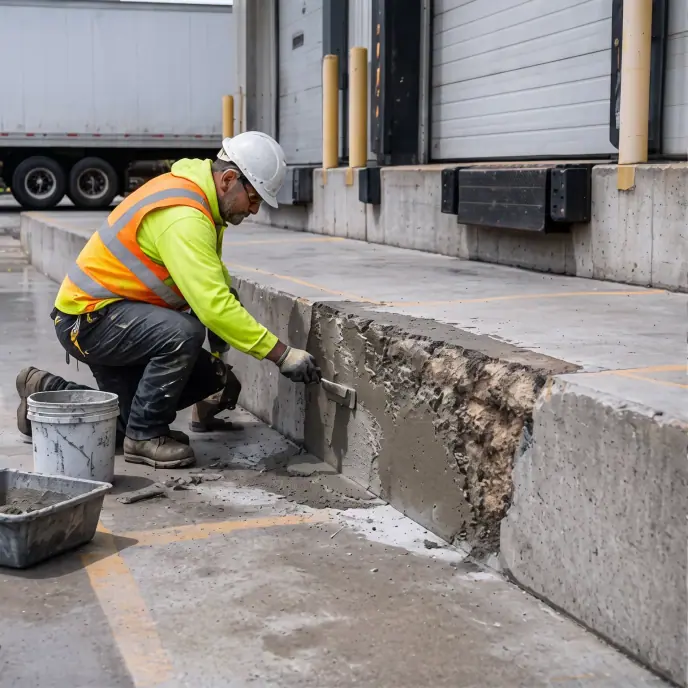
Worker repairing concrete at a commercial loading area
Your project, your next step

Address damaged concrete with the needs of the occupied property in view.

Include damaged cracks and joints

Moving cracks are often routed and sealed with flexible sealant to keep water out, while dormant structural cracks may be candidates for epoxy injection under engineer guidance. Resealing joints across a lot or floor prevents water and debris from damaging slab edges.

Plan around the occupied property

Commercial repair is usually scheduled around operations: overnight in a retail lot, during a shutdown in a plant, or one dock door at a time at a warehouse. Rapid-setting materials can reduce closure windows, though they require careful handling and temperature management. Barricades, signage, and dust control keep the public and staff safe.

Prioritize repairs across multiple areas

Property managers responsible for several buildings often benefit from a condition survey that rates every walk, lot, dock, and slab. Grouping repairs by urgency lets the most hazardous items move first while lower-priority work is bundled into a later phase for better efficiency. Repeating the survey every year or two shows whether repairs are holding and where new problems are developing, which turns concrete maintenance into a predictable budget line instead of a series of emergencies.

Photos tied to a simple site map are usually enough to start that survey, and they make later conversations about scope and phasing far clearer. A shared record also helps when ownership or management changes, because the next team inherits a clear history of which areas were rebuilt and when. That history also supports warranty conversations and capital planning for future fiscal years.

Your commercial concrete repair estimate: what changes the scope

Repair cost depends on wear and damage, depth, preparation, quantities and the method proposed. Restricted work periods and access needs can change the scope on an occupied property. Ask what condition is addressed, what concrete remains and what follow-on work is excluded. A localized surface repair and a full-depth replacement should be compared by their purpose and their price.

Request an estimate for commercial concrete repair in Baltimore

Share the address, approximate damaged area and photos with Baltimore’s Concrete. Include any past repairs, known movement and daily restrictions so the next step can focus on the right scope.

Cracking

Settlement

Spalling

Failed patches

Surface deterioration

Outcome A

Repair may make sense

  • Damage is limited to isolated areas
  • The slab is still well supported underneath
  • The cause has been found and can be corrected
  • The surface still sits at a usable grade

Outcome B

Replacement may make sense

  • Cracking or settlement runs across the whole surface
  • The base has washed out or lost support
  • Earlier patches keep failing
  • The grade or drainage needs to change

The right call depends on what an on-site look at the concrete and the ground beneath it shows.

Make your next step count

Planning commercial concrete repair

Document the damaged areas, compare repair and replacement boundaries, and discuss closures and access needs for the occupied property.

Details that shape your scope

  1. Which damaged areas create trip or vehicle hazards?

  2. Has the area been patched before?

  3. When can each area close for repair?

Questions & answers

Commercial repair questions

Localized, shallow damage on a sound base is often repairable. Widespread wear and damage, base failure, or structural cracking usually points toward replacement.

Read: Compare surface repairs with full-depth work

Joint repairs are often done aisle by aisle with fast-setting materials to keep most of the floor in use.

Settled panels that remain intact can often be lifted and stabilized. Broken or crumbling panels usually need replacement.

Durability depends on the cause of failure, preparation, and material. Repairs last best when the underlying cause is fixed too.

Start your project

Request a commercial concrete estimate.

Discuss your property’s concrete needs with Baltimore’s Concrete, including the space, access and intended use.