Specialty · Baltimore, MD

Concrete Core Drilling & Coring in Baltimore

Need a round opening for a pipe or service? Discuss core drilling with Baltimore’s Concrete, including hole size, position and the need to identify reinforcement or embedded services.

How this service can help
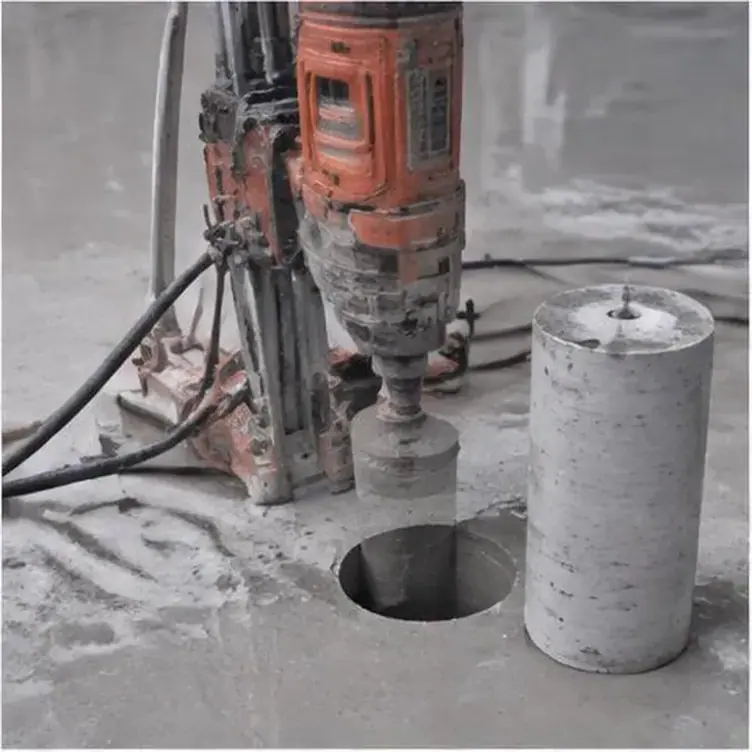
Concrete core drill and cylindrical concrete core

Plan a concrete penetration around the service it carries

A pipe, duct or other service needs an opening in the right position and size. Baltimore’s Concrete offers core drilling for defined concrete penetrations, subject to the structure and embedded conditions being understood.

Confirm the opening the installing trade needs, including any allowance for a sleeve or fitting. Its position, angle and surrounding concrete matter alongside diameter. Share the relevant drawings and known embedded conditions so the penetration can be discussed in context, rather than assuming that a location is clear because the required hole is small.
Request an estimate for your specialty work.

Describe the location, dimensions and purpose of the work. Mention known reinforcement, embedded utilities or structural drawings so you can discuss the preparation the job needs.

Your core drilling options

The opening needs to match the service and the surrounding construction; a larger rectangular opening may instead call for concrete cutting. Share the required diameter, concrete thickness if known and a marked location so the scope does not depend on an approximate position.

Drilling can encounter utilities, reinforcement or post-tensioning inside the concrete. Right locating and any required structural review need to be addressed before the penetration is made.

Working access, the area below the drill and water or debris management can affect the operation. Show both sides where possible and find any occupied space or equipment that needs protection.

Address locating before the penetration

Every core drilling location should be scanned before drilling, since the bit is traveling straight through material that may contain rebar, conduit, or post-tension cable directly in its path. GPR scanning identifies these obstructions and, where a tendon is found, the hole location is often shifted rather than drilled through it.

Post-tension cable is a particular concern in core drilling because a single hole, drilled in the wrong spot, can sever a tendon under tension. That risk is why core drilling locations on post-tensioned structures are treated as fixed only after review of the scan, not before.

Confirm diameter, depth and angle

Core drilling covers a wide range of hole sizes, from small-diameter holes for anchors and conduit to larger diameters for plumbing stacks or mechanical penetrations. The required diameter is usually dictated by what has to pass through the hole, with some extra clearance built in depending on the application.

Depth and angle matter just as much as diameter. A thick wall or slab needs a drill rig that can keep the hole straight through its full depth. An angled hole changes how the rig is set up. It can also take longer to drill than a hole made at a right angle to the surface.

Plan for water and slurry collection

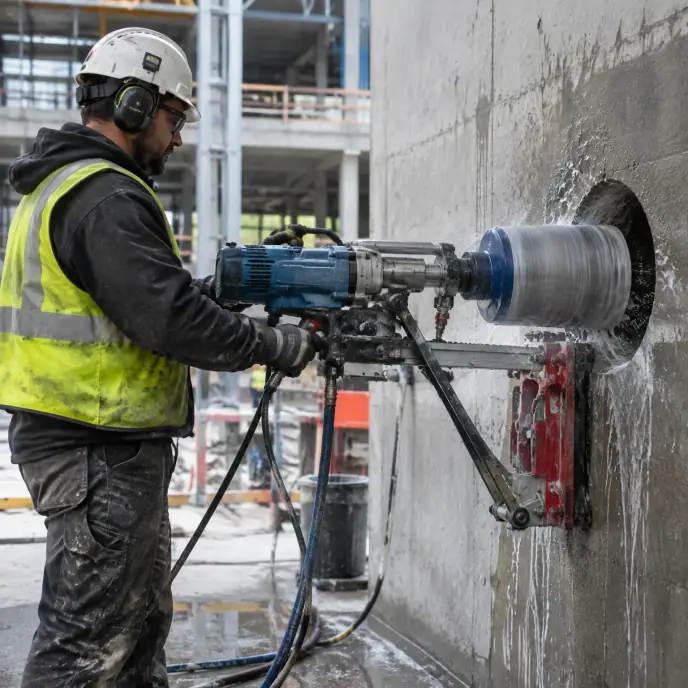
Core drilling is often done wet, with water circulated through the bit to cool it and flush out the cuttings as slurry. That slurry needs to be collected at the hole rather than allowed to run across floors or down walls, which matters most in finished interiors, near electrical panels, or on upper floors where water can travel to spaces below.

Vacuum tools and rings around the drill can help contain water and debris. If the hole passes into a space still in use below, plan containment on both sides. This keeps water and loose pieces from falling through while the crew completes the hole.

Core drill cutting a round opening through concrete
Your project, your next step

Plan a defined concrete penetration for the service that needs to pass through.

Consider occupants and dust-sensitive areas

A core hole is drilled with water at the bit in most cases. The water is contained with a ring or vacuum so it does not run across the floor, and any dry work nearby, such as cutting a recess, needs its own dust control.

Ventilation also matters in enclosed or below-grade spaces, where both dust and the exhaust from drilling equipment can accumulate if the area is not well ventilated during the work.

Coordinate the opening with the installing trade

Core drilling almost always exists to serve another trade's work, whether that is a plumber routing a stack, an electrician pulling conduit, or a structural contractor setting an anchor. Confirming the exact diameter, location, and depth with that trade before drilling avoids a hole that is the wrong size or in the wrong spot once the receiving work arrives on site.

Sleeve or fire-stopping needs may also apply depending on what passes through the hole and what fire or sound rating the surrounding structure needs to maintain, which is worth confirming with the project's design needs before the hole is finalized.

Include access on both sides of the concrete

Rowhouse basements, slab foundations, and older masonry buildings around Baltimore each present different core drilling conditions. A basement floor penetration may be straightforward slab work, while a penetration through a load-bearing wall or an elevated floor in a commercial building raises extra structural and scanning factors.

Multi-story buildings add the complication of penetrations that pass between occupied floors, where containment above and below the hole, and planning with occupants, becomes part of the planning conversation rather than an incidental detail.

Your core drilling estimate: what changes the scope

Core drilling estimates depend on the number of openings, diameter, depth, angle and access. The area below or behind the drill, locating needs and water collection can change the operation. Clarify whether sleeves, sealing or firestopping belong to another trade. Comparable proposals should use the same opening schedule and working conditions, not only a count of holes.

Request an estimate for core drilling in Baltimore

Contact Baltimore’s Concrete with the address, marked photos and service needs. Include available drawings and locating details so the conversation can focus on the proposed opening and its limits.

Make your next step count

Planning core drilling

Specify the penetration diameter and position, address locating and structural needs, and discuss access and protection on both sides of the opening.

Details that shape your scope

  1. What diameter and depth does the penetration need, and what will pass through it?

  2. Has the drilling path been scanned for rebar, conduit, or post-tension cable?

  3. Does the penetration pass through to an occupied space that requires containment on both sides?

Related work

Often planned alongside

Questions & answers

Core drilling questions

Locating helps find reinforcement and embedded services before a penetration is planned. It has limitations and does not guarantee a clear path; structural records, the receiving trade’s needs and qualified review also inform the work.

Core drilling can range from small anchor-size holes to large-diameter penetrations for plumbing or mechanical work, with the exact available sizes depending on the equipment used for a given job.

Wet drilling is common because it cools the bit and controls dust, but dry drilling with vacuum extraction is sometimes used in settings where water is impractical.

Yes, since the hole is usually sized and located for a specific plumbing, electrical, or mechanical need, confirming those details with the receiving trade beforehand avoids a mismatched penetration.

Read: Coordinate the opening with the installing trade

Both terms describe drilling a round opening through concrete. The proposed hole diameter, depth, location and surrounding structure determine the preparation needed. Find any known reinforcement, utilities or post-tensioning before planning the penetration.

Start your project

Request a cutting, drilling or demolition estimate.

Discuss cutting, drilling, sawing or demolition with Baltimore’s Concrete using the dimensions and location of the work.