Specialty · Baltimore, MD

Concrete Demolition in Baltimore

Remove the concrete standing between you and the next stage. Discuss concrete demolition with Baltimore’s Concrete, including the removal limits, access and structures that need to remain.

How this service can help
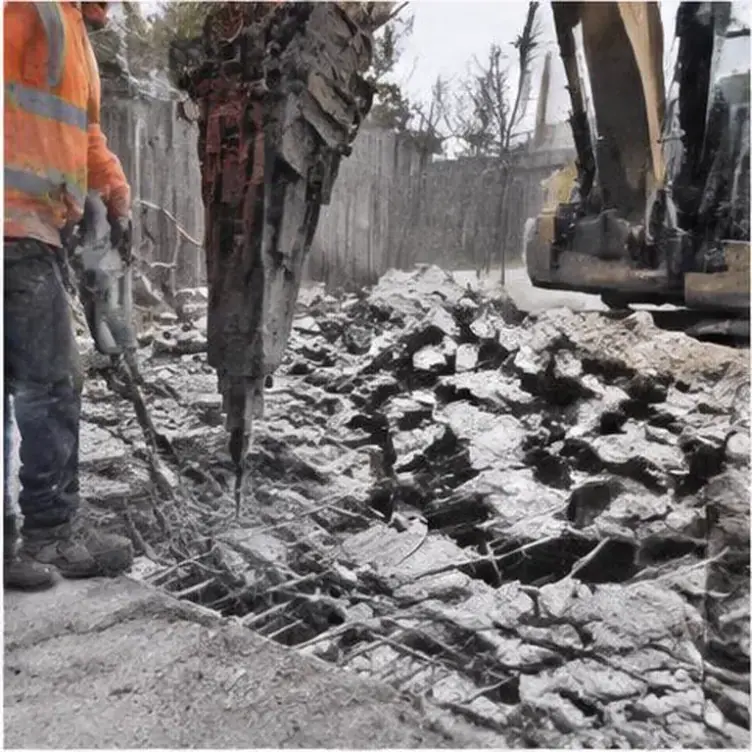
Broken concrete slab during demolition

Remove the concrete that stands in the way of your project

Old concrete may need to come out before your next job can start. Baltimore’s Concrete offers concrete demolition where the removal area and the parts that must stay can be clearly defined. Tell us what you want to change and what comes next.

Mark the concrete that needs to go. Show nearby walls, floors and finishes that need protection. Tell us how crews can reach the work and what you know about steel, pipes or wires in it. These details help define the cuts, removal and any new concrete you want in the same quote.
Request an estimate for your specialty work.

Describe the location, dimensions and purpose of the work. Mention known reinforcement, embedded utilities or structural drawings so you can discuss the preparation the job needs.

Your concrete demolition options

Taking out a whole slab is different from removing one part beside concrete that must stay. Show us the walls, paving and planted areas near the work. The plan needs clear limits so crews know what to remove and what to protect.

The slab thickness, steel and hidden services affect how it can be removed. Concrete that helps support a building needs a structural review before work starts. It is not the same as taking out a path or a slab that stands on its own.

Plan room for tools and a route for the broken pieces to leave. If you want new concrete after removal, include that in the request. The removal edges should fit the next pour, and the quote should say whether that new work is included.

Identify the structural role of the concrete

Structural demolition removes concrete that forms part of a building’s support. That may include a wall, column, foundation section or a slab tied into the frame. Before any of it comes out, the team must know where the weight goes now and how that load path will change when the section is removed.

A slab being replaced on its own poses a different problem from a slab that helps hold up a structure. In structural work, the parts that stay must remain supported throughout the job. That is why the review must cover the whole load path, not only the piece you want removed.

Define removal boundaries with planned cuts

A slab section often starts with saw cuts around the planned edges. This helps keep the breaker from cracking concrete that must stay. Crews then break within those lines and load out the pieces. The cut plan should be clear before the breaker starts.

Those edges also protect nearby finishes, structural parts and services. Show the crew what must stay untouched. A good removal plan says both what comes out and what needs to remain sound for the next stage of the project.

Address embedded reinforcement and services

A large removal area may cross more pipes, wires and steel than a small cut. Scans help map the whole section. If post-tensioned cable is found, stop and involve the building’s engineer. The plan must address it before any breaking begins.

Post-tension tendons hold stored force and must not be treated like ordinary rebar. They may need to be de-tensioned or dealt with through another qualified process. The responsible structural professional and a qualified team must set that plan before the tendon or the concrete around it is disturbed.

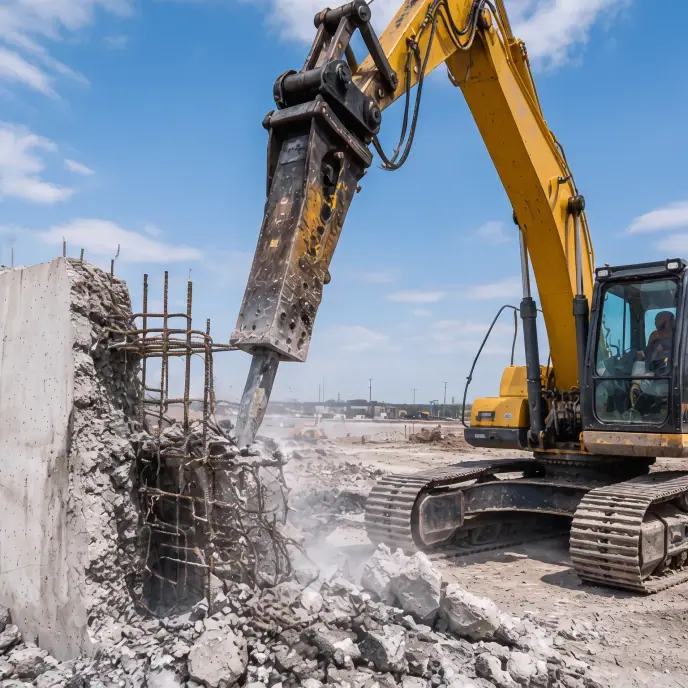
Excavator-mounted breaker demolishing reinforced concrete
Your project, your next step

Set out what comes out, what stays and how the next stage of your build will fit.

Sequence removal around retained construction

Structural concrete rarely comes out in one step. A wall or slab tied to the frame may need temporary shoring first. Shoring carries the weight while the target section is removed. The engineer-led plan must set which parts come out first and how the remaining structure will stay supported.

Taking pieces out in the wrong order can put weight onto parts that were not designed to carry it. Breaking can also send vibration into finishes, plant or nearby structural parts. The site may need slower, more controlled methods in those areas to protect what remains.

Include dust, debris and containment

Breaking concrete creates dust and loose pieces. A building still in use may need barriers and extra protection around people, equipment and shared routes. Agree on the work area, dust controls, collection points and clean-up duties before the job starts. They should be part of the scope, not a vague final step.

Plan how pieces will be broken down, where they can be held on site and how they will leave. Check doorways, floors and corners along that route. The haul-away plan should protect the structure and finishes outside the main removal area as well.

Protect utilities and adjoining structures

Pipes and wires may still serve people in nearby rooms. Some cannot be shut down for the whole job. Scans and utility checks help the team find them and plan how to protect them before the breaker starts. Show any lines or services that must remain in use.

Walls, footings and other structural parts that stay may need to be watched during removal. Vibration and changes to the load path can affect them, even for a short time. The removal plan should say which checks and support are needed as each stage proceeds.

Your concrete demolition estimate: what changes the scope

The price depends on the area, thickness, steel, structural role and access. A section beside a wall that must stay needs a different plan from a slab in open space. Ask what the quote includes for scans, barriers, removal, haul-away and the state of the site afterward. New concrete or other rebuilding is separate unless the quote clearly includes it.

Request an estimate for concrete demolition in Baltimore

Send Baltimore’s Concrete the address, a rough size and clear photos of the work area and route in. Explain what you want to build next and which parts must stay untouched. If you have drawings, scans or details of past work, include them in the project discussion.

Make your next step count

Planning concrete demolition

Mark the removal edges, check the structure and services, then plan access, protection and haul-away.

Details that shape your scope

  1. Is the concrete being removed carrying structural load that will need temporary support during the work?

  2. Has the area been scanned to confirm reinforcement layout and rule out post-tension cable?

  3. What condition does the exposed edge or subgrade need to be left in for the next phase of work?

Related work

Often planned alongside

Questions & answers

Demolition questions

Structural work removes concrete that helps carry a building’s weight, such as a wall, column or footing. The plan must show how the parts left in place will stay supported. Taking out a slab that stands on its own does not involve the same load-path problem.

Often, yes. Saw cuts set the removal edges and help protect concrete that must stay. The right sequence depends on the slab, the site and the structural plan for the work.

The removal plan needs review by the responsible structural professional and a qualified team before the tendon or surrounding concrete is disturbed. Do not assume a tendon can be cut, broken or released as part of ordinary demolition.

Not always. It depends on the load carried by the part being removed and where that weight will go during the work. The structural review must decide what support is needed for that specific building.

Read: Sequence removal around retained construction

Start your project

Request a cutting, drilling or demolition estimate.

Discuss cutting, drilling, sawing or demolition with Baltimore’s Concrete using the dimensions and location of the work.