Residential · Baltimore, MD

Concrete Sidewalk Installation & Replacement in Baltimore

Improve the route to and around your property. Baltimore’s Concrete offers sidewalk installation and replacement for pedestrian access, worn surfaces and changing property needs.

How this service can help
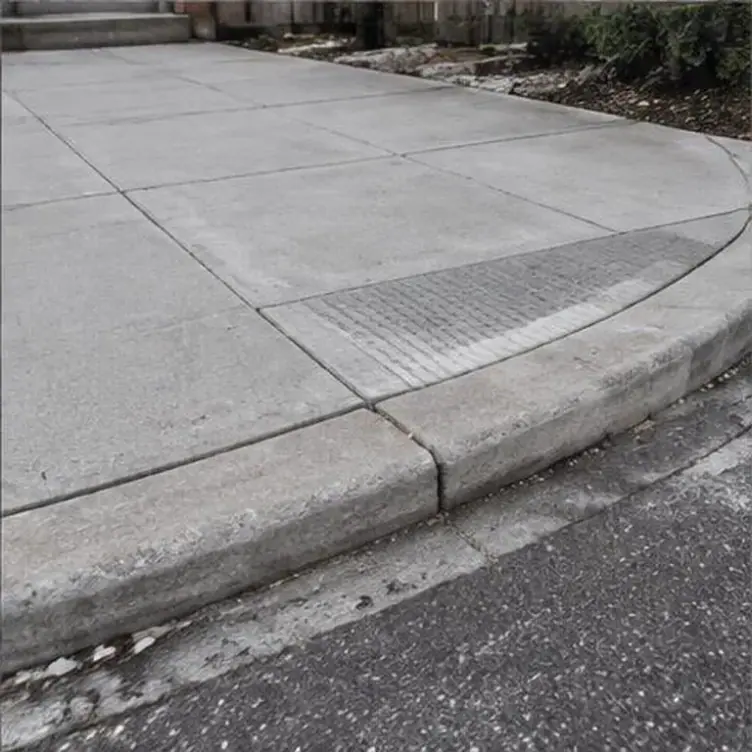
Textured sidewalk transition with a curb ramp

Improve the walking route serving your property

Replace damaged panels or create a new concrete sidewalk with Baltimore’s Concrete. Discuss the route, condition and adjoining areas so the proposed work addresses how people actually reach and move around the property.

Show the panels before and after the section causing trouble. A sidewalk needs a usable connection along the route, including at driveways, steps and adjoining paving. Mark lifted edges, cracked areas and places where water collects so the requested work addresses the walking surface as a whole rather than only its most obvious defect.
Request an estimate for your home.

Tell us which area you want to improve, its approximate size and how you use it. Include access restrictions or drainage concerns so the conversation starts with your property's needs.

Your concrete sidewalks options

Show broken edges, lifted panels and changes in level along the route. Include gates, steps, driveways and door approaches so the boundaries of the sidewalk work are clear.

Concrete leveling may suit some settled panels that remain in usable condition. Discuss concrete repair separately from replacement when you want to understand whether a smaller intervention fits the damage.

The walking route needs to work with the surrounding levels and water movement. Tell us about standing water, roots and any public-sidewalk or property requirements that need confirmation before the scope is settled.

Identify why a sidewalk panel has moved

A sidewalk panel that has lifted at one edge is often a sign of a root growing beneath it, frost heave, or settlement of the soil on one side of the panel. Each of these causes points toward a different fix, so understanding why a specific panel moved is part of scoping the repair correctly.

A panel that has cracked into several pieces but remains level is a different problem from one that has tilted, and the two are not necessarily addressed the same way.

Address tree-root conflicts before replacing panels

Mature street trees are common throughout Baltimore neighborhoods, and their roots are one of the most frequent causes of sidewalk panels lifting unevenly over time. Addressing the sidewalk without addressing the root underneath it often leads to the same panel lifting again as the roots continue to grow.

Depending on the tree and the extent of the root system, options can range from working around the root with a modified panel design to coordinating root pruning as part of the project, each with different tradeoffs for the tree's health and the sidewalk's longevity.

Connect new panels to neighboring levels

A new or replaced sidewalk panel needs to match the elevation of the panels on either side of it, since even a small height difference between adjoining panels creates a trip hazard. This matching also has to account for the slope of the adjacent curb and street so water continues to drain the way it did before.

Where a sidewalk ramps down toward a driveway apron or a curb cut, that transition slope needs particular attention, since it is one of the more frequently walked sections of sidewalk on a residential block.

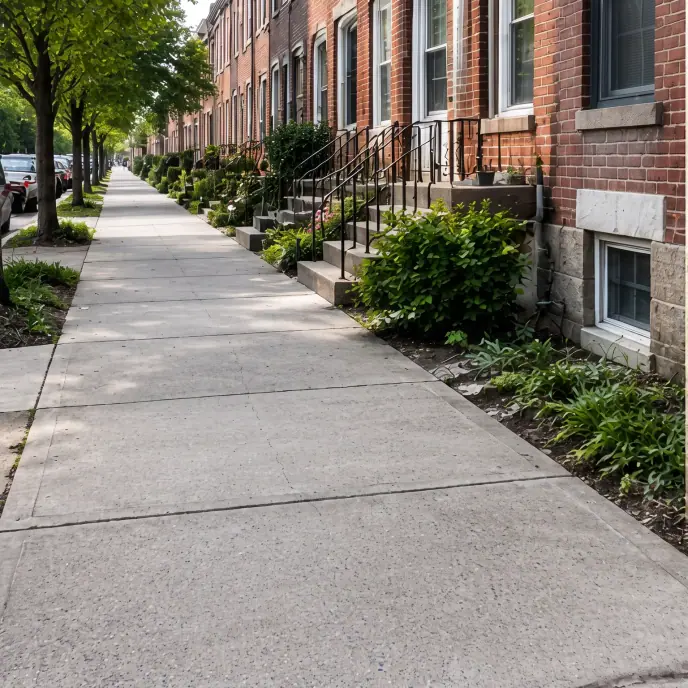
Concrete sidewalk panels along brick rowhouses
Your project, your next step

Connect the walkway panels, entrances and adjoining levels in your sidewalk improvement.

Include the base under the sidewalk

Sidewalks are thinner than driveways but still depend on a properly prepared base to resist settlement and heaving. Soil washed out from beneath a panel by poor drainage, or compacted unevenly during original construction, is a common underlying cause of panels that move independently of their neighbors.

Correcting the base under a replaced panel, rather than simply pouring new concrete over disturbed soil, is what keeps the new panel from developing the same problem again.

Plan the work around the available frontage

Sidewalk replacement on a narrow rowhouse block often means equipment and material access is confined to the sidewalk itself or a small section of the street, which requires careful coordination to avoid blocking pedestrian access longer than necessary. Protecting adjacent lawns, tree pits, or planting beds during this work is part of planning the job responsibly.

Choose the right replacement boundaries

If only one panel is damaged and the rest of the run is sound, replacing that single section is usually the most direct fix. But when several panels along a stretch show similar signs of age or distress, replacing the whole run at once can produce a more consistent result and avoid repeating the project again soon after.

Your concrete sidewalks estimate: what changes the scope

The number and size of panels, removal depth, base repairs and access affect a sidewalk estimate. Root conflicts, a changed grade or work beside retained paving can require additional coordination. Identify whether the route is private or connects to the public frontage, and clarify project approval responsibilities. Comparable proposals should show the same panel limits and adjoining transitions.

Request an estimate for concrete sidewalks in Baltimore

Bring Baltimore’s Concrete the address, approximate length and width, and images of the affected panels. Identify the sections you want replaced or the new connection you want built so the next discussion has a clear purpose.

Make your next step count

Planning concrete sidewalks

Identify the damaged or proposed sidewalk panels, show the adjoining grades and entrances, and clarify replacement limits and access needs.

Details that shape your scope

  1. Is the affected section part of the public sidewalk or a private walkway on your property?

  2. Is there a tree near the damaged panel that may be contributing to the movement?

  3. Are multiple panels along the same stretch showing similar wear, or is it isolated to one spot?

Related work

Often planned alongside

Questions & answers

Sidewalk questions from property owners

It depends on the root; if the root is still actively growing beneath the panel, it may need to be addressed as part of the repair or the panel may lift again over time.

Read: Address tree-root conflicts before replacing panels

Sidewalk panels at the front of a rowhouse often straddle private property and the public way. Ask your city or county who owns which panels before replacement, because the public section may have its own permit and standards.

A height mismatch between adjoining panels is one of the most common trip hazards on residential sidewalks, so matching grade precisely is a safety requirement, not just an appearance detail.

The sidewalk-to-apron transition is reviewed together during planning since both surfaces share that grade, even if the driveway itself isn't part of the scope.

Start your project

Request an estimate for your home.

Bring your driveway, patio, walkway or entrance project to Baltimore’s Concrete. Share your location, dimensions and the improvement you want to make.