Decorative · Baltimore, MD

Stamped Concrete Contractor in Baltimore

Want more character than a plain concrete finish? Baltimore’s Concrete offers stamped concrete so you can explore patterns and textures for your patio, walk or outdoor surface.

How this service can help
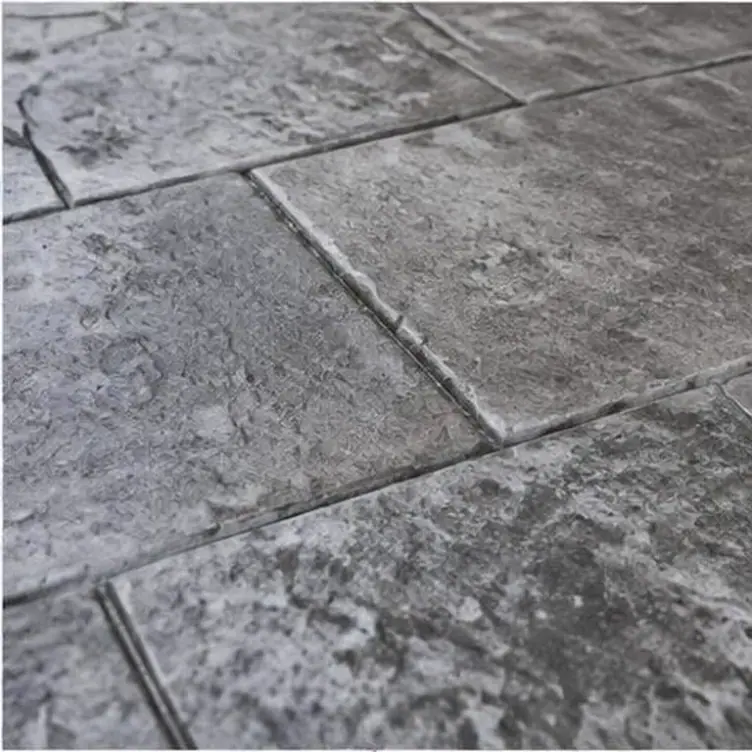
Close view of stamped concrete texture and joints

Bring a defined pattern to your patio or walkway

Create an outdoor surface with the look you want and a layout that fits your home. Baltimore’s Concrete offers stamped concrete for patios and walks, with pattern, color and everyday use considered together.

Look at the pattern at the scale of the whole space. A border, a change in color and the position of joints can influence the result as much as the stamp itself. Bring reference images alongside photos of your home so the design discussion connects the desired appearance with the shape and use of the patio or walk.
Plan your decorative concrete project.

Describe the area, the look you want and whether the concrete is new or existing. Your preferred colors, texture and everyday use help narrow the options to discuss.

Your stamped concrete options

Share the surrounding brick, siding and landscaping alongside the pattern references you like. Borders, direction and the size of the area help turn a sample into a design discussion for your property.

Colored concrete or exposed aggregate may suit a different texture or appearance. If a slab already exists, discuss concrete resurfacing separately from a new stamped pour so the preparation and limitations are clear.

Tell us how the area will be walked on, cleaned and drained. Removal, layout changes, borders and access can influence the project as much as the chosen stamping pattern.

Choose a pattern and border that fit the space

Stamp mats come in dozens of patterns, from ashlar slate to running-bond brick, and the pattern chosen should relate to the architecture of the house. A rowhouse with a brick facade often pairs well with a brick-pattern stamp on the front steps or walk, while a more modern renovation may suit a simpler, large-format stone look.

Borders are a separate decision from field pattern and are frequently used to frame a stamped area, transition into a driveway, or disguise a control joint that would otherwise cut through the pattern awkwardly.

Plan visible joints within the pattern

Control joints are still required in stamped concrete for the same reasons they are required anywhere else: to manage where the slab cracks as it shrinks and moves. The difference is that joint lines need to be planned along pattern lines, such as the grout lines of a stamped brick or stone look, so they read as part of the design rather than as a visible cut across the texture.

Start decorative work with the right base

Where the soil under a patio swells and shrinks with moisture, and that movement can telegraph through a stamped surface as uneven settling at panel edges. A properly compacted gravel base and attention to drainage away from the stamped area both reduce the odds of that kind of movement later.

On rowhouse lots where the stamped area sits close to a foundation wall or shared property line, the base and slope also need to direct water away from both the house and the neighboring structure.

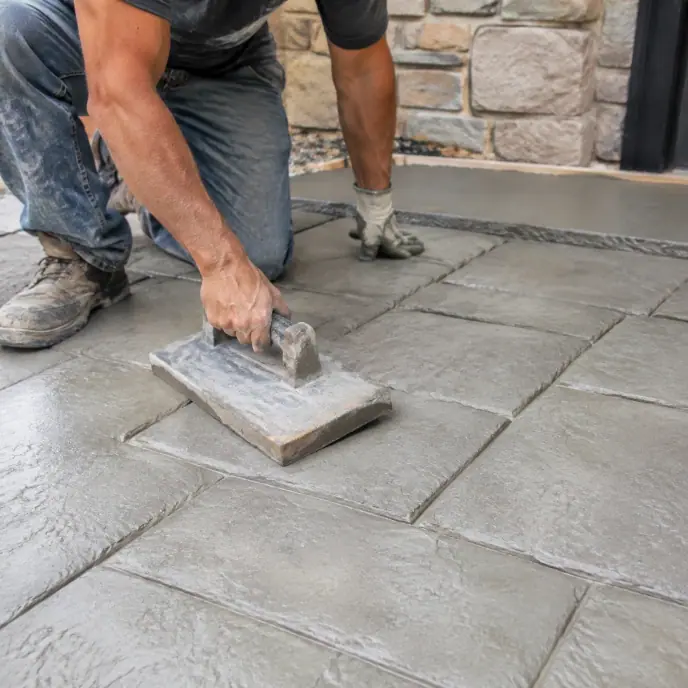
Craftsperson stamping a stone pattern into fresh concrete
Your project, your next step

Bring pattern and texture into your patio or walkway without losing sight of everyday use.

Compare color approaches for the stamped surface

Stamped concrete can be colored integrally, meaning the color is mixed into the concrete before the pour, or with surface-applied color hardeners and antiquing washes applied during finishing. Integral color tends to be more uniform and forgiving of surface wear, while color hardeners and antiquing can create more dramatic, multi-tone effects that mimic natural stone variation.

Understand sealing and upkeep before choosing

A sealer protects both the color and the texture of stamped concrete from UV fading, salt exposure, and surface wear, and it needs to be reapplied on a schedule rather than treated as a one-time step. Unsealed or under-sealed stamped concrete in a Baltimore winter will show salt staining and surface erosion in the recessed grout lines faster than the raised areas.

Resealing also restores some slip resistance that can wear down on heavily trafficked stamped patios and walkways over time.

Know the limitations of later repairs

A chip, spall, or crack in a stamped surface is harder to repair invisibly than the same damage on plain concrete, since any patch has to match both color and the surrounding pattern texture. Small chips are sometimes filled with a tinted patching compound textured to blend with the nearby stamp, while more extensive damage may call for cutting out and replacing an entire pattern section along existing joint lines.

Because exact color and pattern matching gets harder as a stamped surface ages and weathers, addressing small chips and cracks promptly tends to produce a less noticeable repair than waiting until the damage has spread.

Your stamped concrete estimate: what changes the scope

Stamped-concrete cost depends on the underlying installation as well as the decorative finish. Removal, base preparation and access sit alongside pattern choice, borders and color treatments. Ask which sealing and finish steps are included, and what care will be needed later. A defined design makes comparisons more useful than a price based only on the name of a pattern.

Request an estimate for stamped concrete in Baltimore

Bring Baltimore’s Concrete your address, approximate dimensions and finish references. Include photos of the adjoining areas and explain whether the project is a new patio, walkway or replacement of existing concrete.

Make your next step count

Planning stamped concrete

Choose a pattern direction, discuss color and borders, and compare the preparation and care requirements before confirming the decorative scope.

Details that shape your scope

  1. What pattern and color combination fits the architecture and the size of the space?

  2. Where will control joints fall relative to the pattern layout?

  3. What is the weather forecast for the pour and stamping window?

Related work

Often planned alongside

Questions & answers

Stamped concrete questions

Confirm return-to-use and sealing dates for the actual mix, weather, curing plan and finishing products. Foot traffic, furniture and vehicles can impose different demands, so a single fixed wait is not appropriate for every project.

Existing stamped concrete generally can't be restamped; once it's cured, maintenance options are limited to cleaning, resealing, and possibly a decorative overlay rather than a new stamp.

Stamped concrete is subject to the same shrinkage and movement as any slab, and proper joint placement within the pattern helps control where cracking occurs rather than preventing it entirely.

Read: Plan visible joints within the pattern

Smaller-scale patterns with simpler repeat lines, like a running-bond brick look, tend to read better in narrow spaces than large-format stone patterns that need more width to display properly.

Start your project

Request a decorative concrete estimate.

Discuss the look you want with Baltimore’s Concrete, from stamped patterns to color and exposed aggregate.