Repair · Baltimore, MD

Concrete Removal & Haul-Away in Baltimore

Clear old concrete for what comes next. Discuss removal and demolition with Baltimore’s Concrete, including access, adjoining structures and the area you need cleared.

How this service can help
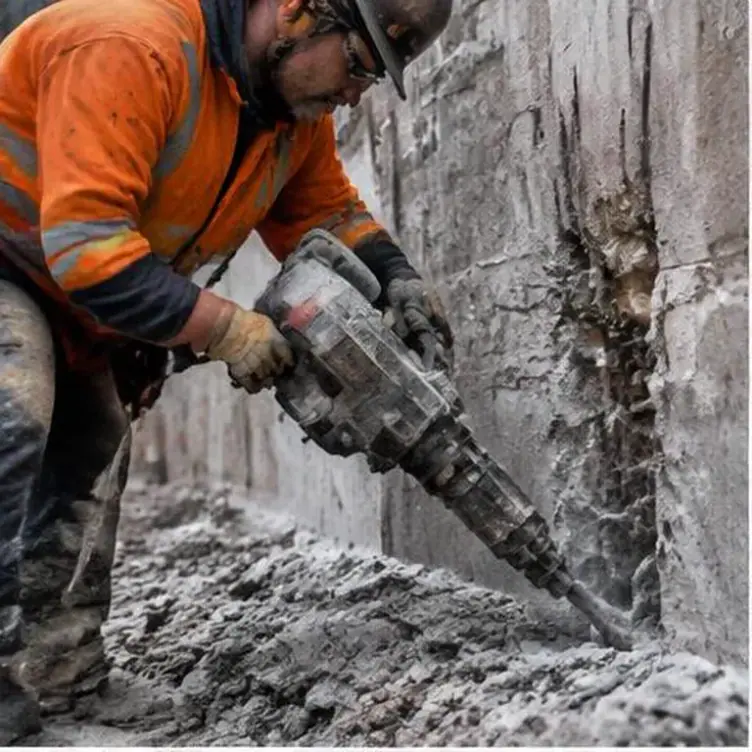
Worker breaking concrete with a powered demolition tool

Clear the concrete for the next use of your space

Remove an old driveway, patio, walkway or slab with Baltimore’s Concrete. Discuss the removal area and haul-away needs so the scope reflects the concrete you want gone and the parts of the property you want to keep.

Define the area to remove and the condition the next stage needs. Will the space receive new concrete, landscaping or another construction element? Mark nearby surfaces, services and structures that must stay. A clear removal brief helps distinguish the concrete breaking from the access, material handling and preparation required around it.
Get started on your concrete repair.

Describe the cracks, uneven areas or surface damage, and where they occur. Mention standing water or previous repairs so you can discuss options for the actual condition.

Your concrete removal and demolition options

Show adjoining surfaces, walls, utilities and features that need to remain. Concrete cutting may be needed where a defined edge matters, while selective concrete demolition can involve a different structural scope.

The route for equipment and removed material can change the job. Include gates, alleys, working room and known concrete thickness or reinforcement when describing the removal area.

A cleared area for landscaping and a site for new concrete replacement may need different finishing or preparation. Tell us your intended next use so the removal discussion has a defined end point.

Account for thickness and reinforcement

Older Baltimore slabs can vary significantly in thickness and in whether they were reinforced with wire mesh, rebar, or nothing at all, and that variation changes what equipment and effort removal takes. A thin, unreinforced sidewalk slab breaks apart and hauls differently than a thick, rebar-reinforced driveway or garage floor.

Confirming these details before starting avoids surprises partway through demolition that could stall the project or require different equipment than originally planned.

Plan equipment access to the removal area

A backyard slab behind a rowhouse may only be reachable through a gate or alley. In that case it may be broken into hand-carried pieces or worked with small equipment, which takes longer and changes the price.

Planning the removal around actual site access, rather than assuming full-size equipment can reach every part of a property, keeps the project realistic from the start.

Protect the construction that needs to stay

On rowhouse blocks, removal next to a shared wall or a neighbor's foundation is done with smaller tools and more care, since heavy breaking can damage what is next door. Debris often has to leave through a narrow alley.

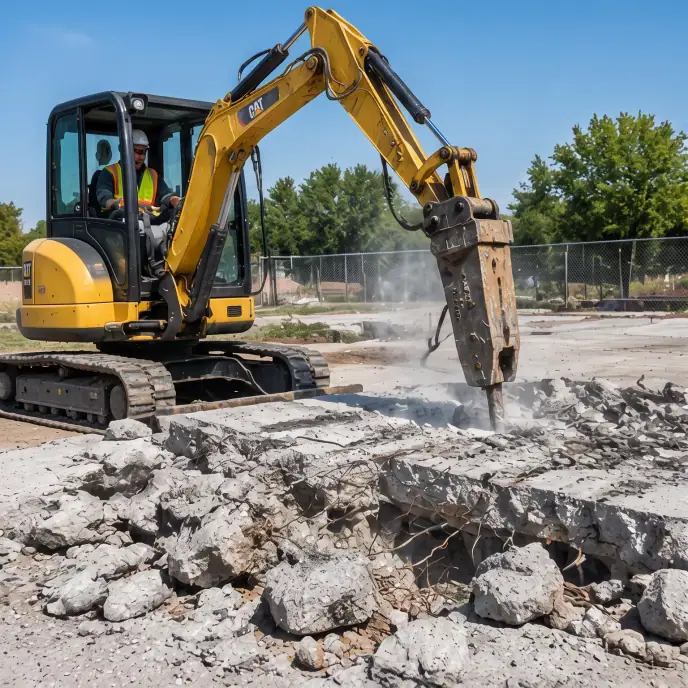
Excavator breaking and removing damaged concrete
Your project, your next step

Clear the defined concrete area so your next improvement has room to begin.

Address buried services before removal

Utility locates before removal matter here, since older Baltimore alleys and yards can have gas, water, sewer, and electric lines at inconsistent depths that weren't always documented accurately. Removal that goes deeper than the slab itself, to address base issues underneath, increases the importance of confirming what's buried nearby first.

Include haul-away in the removal scope

Concrete debris is heavy and bulky, and getting it off a rowhouse lot often means staging it in a driveway, alley, or street-adjacent area before it can be loaded for hauling. The hauling route itself needs to be planned around what the site allows, since not every property has room for a dumpster or direct truck access to the demolition area.

Breaking out a slab produces broken pieces that take up much more room in a truck than the slab did in place. Estimating the load count ahead of time keeps the next phase from waiting on another haul.

Compare selective removal with a full clear-out

Not every project requires tearing out an entire slab; sometimes only a damaged section needs to come out while the rest of the surrounding concrete stays in place. Deciding where to cut that boundary matters, since cutting through the middle of an existing panel rather than along an existing control joint can leave an unsupported edge that cracks again shortly after the new section is poured.

A partial removal plan should also account for whether the remaining concrete shares the same underlying cause of damage as the section being removed, since leaving a compromised area in place just delays a second round of removal later.

Your concrete removal and demolition estimate: what changes the scope

Removal cost changes with thickness, reinforcement, access and the volume that needs hauling away. Selective removal near retained concrete or a building can require more care than clearing an isolated slab. Clarify whether the proposal includes saw-cut boundaries, debris removal and preparation for the next stage. Rebuilding or landscaping afterward should not be assumed to be included without being specified.

Request an estimate for concrete removal and demolition in Baltimore

Start with the address, approximate area and photos of the concrete and access route. Baltimore’s Concrete can discuss the removal boundaries, retained areas and haul-away requirements from that project brief.

Cracking

Settlement

Spalling

Failed patches

Surface deterioration

Outcome A

Repair may make sense

  • Damage is limited to isolated areas
  • The slab is still well supported underneath
  • The cause has been found and can be corrected
  • The surface still sits at a usable grade

Outcome B

Replacement may make sense

  • Cracking or settlement runs across the whole surface
  • The base has washed out or lost support
  • Earlier patches keep failing
  • The grade or drainage needs to change

The right call depends on what an on-site look at the concrete and the ground beneath it shows.

Make your next step count

Planning concrete removal demolition

Define the concrete to remove and the surfaces to keep, discuss equipment access and haul-away, and identify the requirements of the next construction stage.

Details that shape your scope

  1. What is the thickness and reinforcement of the concrete being removed?

  2. What equipment can realistically access the site given its layout?

  3. What will happen to the site once the concrete is removed: new pour, different material, or other use?

Questions & answers

Removal and haul-away questions

Not necessarily; some removal projects clear a site for a different use, like landscaping or pavers, rather than a new concrete pour.

Reinforced concrete, with embedded wire mesh or rebar, generally takes more effort and specific equipment to break apart and separate from the metal before hauling.

Read: Account for thickness and reinforcement

Careful planning around equipment size, vibration, and debris staging reduces the risk, but close property lines on rowhouse blocks require extra coordination compared to a site with more open space.

Taking out a concrete walk that meets a city sidewalk, or an apron that runs to the street, can require approval separate from whatever is built afterward. Confirm what the removal itself needs for your address before the breaker comes out.

Start your project

Request a concrete repair estimate.

Discuss the damage with Baltimore’s Concrete and compare repair, leveling or replacement for the condition of your surface.