Repair · Baltimore, MD

Concrete Replacement in Baltimore

Replace concrete that no longer works for your property. Baltimore’s Concrete offers replacement for deteriorated surfaces and projects that call for a different layout or use.

How this service can help
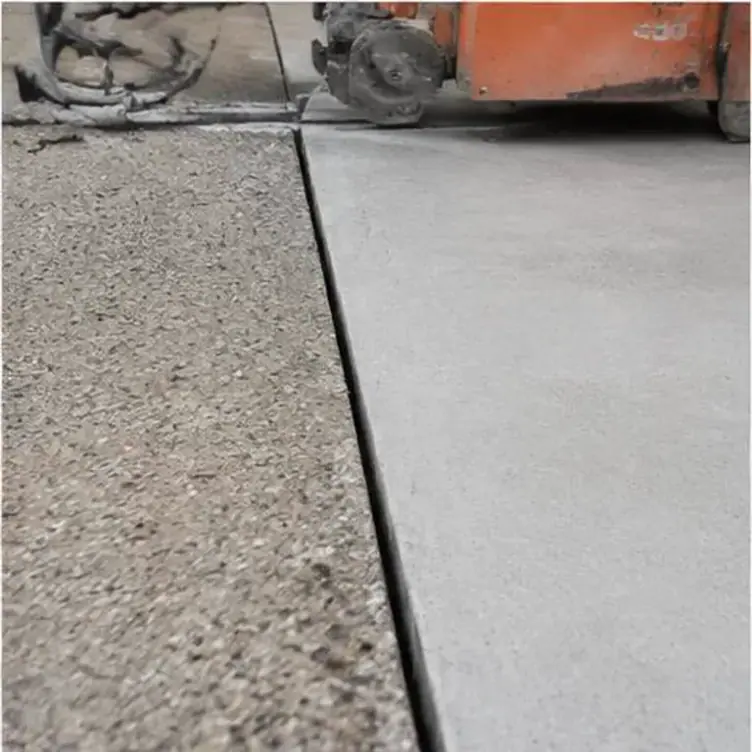
Smooth concrete slab panel beside a textured edge

Replace concrete that is holding your property back

Change a damaged slab or a surface that no longer fits your needs with Baltimore’s Concrete. Concrete replacement gives you a chance to discuss the existing condition and the way you want to use the area next.

Replacement is an opportunity to reconsider the parts of the existing surface that never worked well. Note narrow areas, awkward levels and water collecting at the edges, not just the concrete that has failed. Define what should remain so removal boundaries, connections and the new layout can be discussed as one project.
Get started on your concrete repair.

Describe the cracks, uneven areas or surface damage, and where they occur. Mention standing water or previous repairs so you can discuss options for the actual condition.

Your concrete replacement options

Show the full area and mark the sections you want to keep. Connections to steps, doors, driveways and other paving help establish the replacement boundaries before work is compared.

Tell us about standing water, awkward transitions and a layout that limits the space. Those conditions belong in the discussion alongside the new concrete dimensions and finish.

Concrete repair or concrete leveling may suit some existing slabs. Compare those options with replacement around the condition that would remain, rather than assuming the largest or smallest job is automatically the right one.

If the goal is to clear the area for landscaping or another use without a new pour, review concrete removal and demolition so the request defines the ground condition needed afterward.

Define the complete replacement area

Before any demolition begins, the evaluation should establish how far the damage extends beyond what's visible on the surface, whether adjoining sections of slab are also compromised, and what the base material looks like underneath. Removing only the most visibly damaged section sometimes isn't enough if the surrounding concrete shares the same underlying cause.

This evaluation also identifies what's beneath and around the slab, tree roots, utility lines, or a foundation wall, all of which affect how demolition and new forming are planned.

Use replacement to improve levels and drainage

Replacement is an opportunity to correct a slab's slope or elevation if the original pour directed water toward a foundation, created a tripping hazard at a transition, or sat too close to a door threshold. These adjustments are difficult or impossible to make with a patch or overlay but are straightforward to build into a new pour.

On Baltimore rowhouse lots, correcting drainage during replacement can meaningfully reduce water intrusion into basements and areaways that the original slab's grading contributed to.

Include base preparation in the new work

A replacement project should not simply repour concrete on top of whatever base remains after demolition. Compacting new gravel base material, correcting any soft or moisture-sensitive soil found under the old slab, and addressing any drainage issue identified during evaluation all need to happen before forms go up for the new pour.

Skipping proper base work to save time is one of the most common reasons replacement concrete fails at a similar rate to the original slab it replaced.

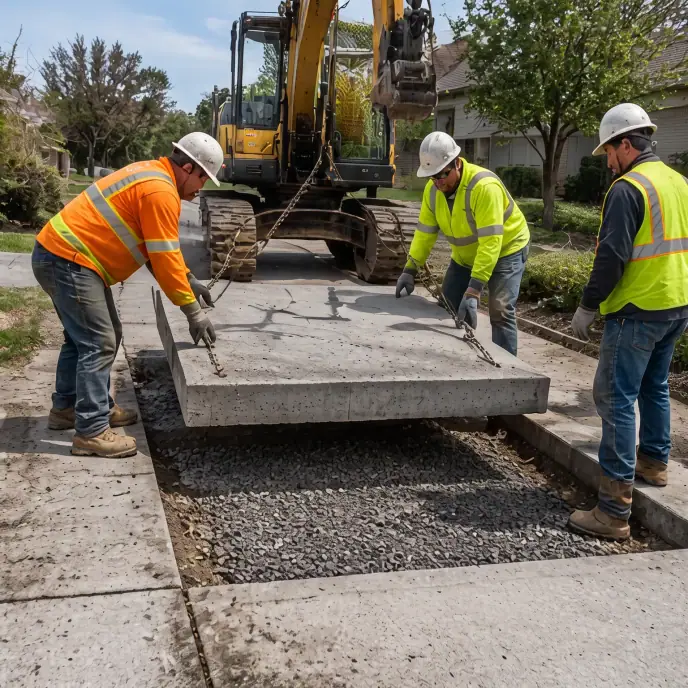
Crew replacing a deteriorated concrete slab section
Your project, your next step

Replace the concrete that no longer serves the space, with the new use in mind.

Set expectations for adjoining concrete colors

When only a section of a larger slab or walkway is being replaced, matching the finish, color, and joint pattern of the surrounding concrete helps the repair blend in rather than standing out as an obvious patch. New concrete will not match aged concrete exactly in color at first, and that difference typically becomes less noticeable as the new section weathers.

Allow time before returning the surface to use

New concrete needs time to cure before it can handle foot traffic, and considerably more time before it can handle vehicle weight, which matters for driveway and alley replacement projects where access needs to be planned around the curing schedule. Weather during curing, particularly temperature swings common in Baltimore's spring and fall, can affect how long that process takes.

Plan access and disruption around the project

Replacement work needs space for demolition debris, new material delivery, and equipment, which is a bigger footprint than most repair methods require. On narrow rowhouse lots this often means careful coordination with neighbors over temporary access, parking, or alley use during the project.

Your concrete replacement estimate: what changes the scope

Replacement pricing includes more than the new concrete volume. Removal, haul-away, base repairs, access and connections to retained surfaces influence the work. Revised dimensions or levels can add benefits but also change the scope. Ask what is included below the slab and at its edges so you can compare the complete replacement rather than only the visible finish.

Request an estimate for concrete replacement in Baltimore

Bring Baltimore’s Concrete the project address, photos and approximate dimensions. Explain what is wrong with the current surface and what a more useful area would allow you to do.

Cracking

Settlement

Spalling

Failed patches

Surface deterioration

Outcome A

Repair may make sense

  • Damage is limited to isolated areas
  • The slab is still well supported underneath
  • The cause has been found and can be corrected
  • The surface still sits at a usable grade

Outcome B

Replacement may make sense

  • Cracking or settlement runs across the whole surface
  • The base has washed out or lost support
  • Earlier patches keep failing
  • The grade or drainage needs to change

The right call depends on what an on-site look at the concrete and the ground beneath it shows.

Make your next step count

Planning concrete replacement

Mark the concrete to replace, identify why the existing area is failing, and discuss removal, preparation and the new surface connections together.

Details that shape your scope

  1. Does the damage extend beyond the section that is visibly failing?

  2. Should elevation or drainage be adjusted as part of the new pour?

  3. What is the realistic timeline for curing before the area returns to use?

Questions & answers

Replacement questions

Replacement removes and repours the concrete entirely, addressing structural issues underneath, while resurfacing only adds a new surface layer over concrete that is already structurally sound.

Partial replacement is possible if the damage is isolated and the remaining concrete is sound, but adjoining sections sharing the same underlying cause may need to be included for a durable result.

Expect a visible difference between new and existing concrete. Mix, finishing and weathering affect color, and an exact match or later convergence is not assured. Discuss replacement boundaries and appearance before agreeing the scope.

Read: Set expectations for adjoining concrete colors

If the failed section is a public sidewalk panel or an alley apron, the replacement may need its own approval and may have to match the public standard rather than the old slab.

Start your project

Request a concrete repair estimate.

Discuss the damage with Baltimore’s Concrete and compare repair, leveling or replacement for the condition of your surface.