Driveways · Baltimore, MD

Concrete Driveway Repair in Baltimore

Address driveway damage before choosing a full replacement. Discuss cracks, low spots and surface wear with Baltimore’s Concrete to explore the repair options appropriate to your driveway.

How this service can help
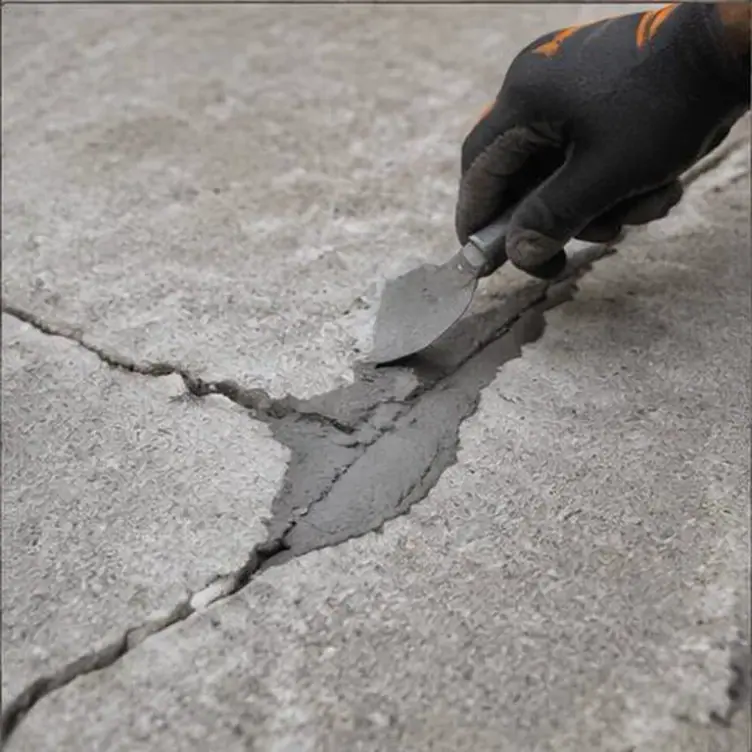
Worker patching a crack in a concrete driveway

Deal with driveway damage before choosing a bigger job

Get a clearer next step for cracked, worn or uneven driveway concrete. Baltimore’s Concrete offers driveway repair alongside leveling and replacement options, so the proposed work can match the condition of your surface.

Show the damaged area and the concrete around it. One broken edge calls for a different conversation from several moving panels, and a visible crack does not establish the cause by itself. Describe changes over time and previous patching so you can compare the boundaries of a repair with leveling or a wider replacement.
Request an estimate for your home.

Tell us which area you want to improve, its approximate size and how you use it. Include access restrictions or drainage concerns so the conversation starts with your property's needs.

Your concrete driveway repair options

Include the whole driveway, close views of affected areas and a view showing any change in level. Tell us whether the problem has grown, where water collects and what previous repairs have been made.

Concrete leveling may suit some sunken panels, while a localized repair addresses a smaller damaged area. Compare those options with driveway replacement when movement or deterioration extends beyond the visible defect.

New repair material may look different from older concrete, and treating a surface defect does not automatically resolve its cause. Discuss the condition you want addressed and what a limited repair would leave in place.

Compare crack repair with replacing individual sections

Narrow, stable cracks that are not actively widening can often be routed and filled to keep water out and slow further deterioration. Wider cracks or ones running through an entire slab section, especially where one side of the crack sits higher than the other, usually call for removing and repouring that section rather than trying to fill the gap.

Matching a new repair section's thickness and reinforcement to the surrounding driveway helps it perform consistently with the rest of the surface instead of becoming a new weak point.

Consider leveling for settled driveway panels

A section of driveway that has sunk relative to the rest usually points to a void or loose soil beneath it, often from water erosion under the slab. Depending on the extent of the void, this can sometimes be addressed by lifting the existing slab back into position, or it may require removing that section to correct the base before repouring.

Simply patching over a sunken area without addressing what caused the settlement tends to produce the same problem again if the underlying movement continues.

Include damaged joints and edges

Deteriorated control joints that have lost their sealant allow water to get beneath the slab, which is one of the more common contributors to further cracking over time, especially through repeated freeze-thaw cycles in winter. Resealing joints and repairing spalled edges along the joint line protects the slab from that ongoing water intrusion.

Edge damage near a garage door or at the street connection often comes from repeated vehicle turning stress concentrated in a small area, and repairs there need to account for that same stress continuing after the repair is complete.

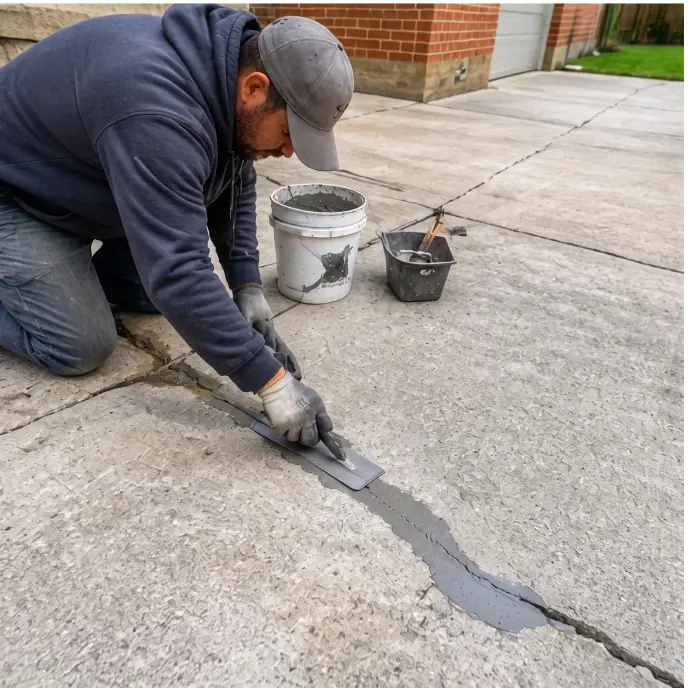
Worker repairing a crack in a concrete driveway
Your project, your next step

Compare the damaged sections and repair options before committing to a larger driveway project.

Know when a surface treatment is insufficient

Thin surface wear, light scaling, or cosmetic damage that has not compromised the slab's structural integrity can sometimes be addressed with a resurfacing approach rather than removal and replacement. This is a narrower category of repair and depends on the slab underneath still being sound.

Resurfacing over a slab with underlying structural problems only delays a more complete repair and can waste money if the base issue was never addressed.

Set realistic expectations for the repaired driveway

Newly placed repair concrete needs time to cure and gain strength before it carries regular vehicle traffic, similar to a new pour, even though the repaired area is smaller. Keeping that section protected during the early cure period helps the repair bond properly and resist future movement.

Match the repair to the type of damage

Not every crack or chip in a driveway calls for the same repair approach. A fine surface crack that has not affected the slab's structural performance can often be sealed to keep water from working its way in and widening the crack through freeze-thaw cycling. A spalled or flaking section, where the top layer of concrete has broken away, needs the damaged material removed and a bonding-compatible patch material placed so the repair adheres rather than simply sitting on top and eventually popping loose under vehicle weight.

Settled sections present a different kind of repair question entirely, since the concrete itself may be sound even though it has dropped relative to the surrounding slab. In those cases, raising the existing section back to grade, rather than demolishing and repouring, can be the more efficient fix if the slab has not cracked through and the base beneath it can be stabilized. Reading which category a given area of damage falls into, cosmetic surface issue, bonding failure, or settlement, determines which repair method will actually last rather than needing to be redone because the cause was left unresolved.

Your concrete driveway repair estimate: what changes the scope

Repair cost depends on the type of damage, the preparation required and how much concrete can remain. A localized repair may involve fewer materials, but repeated work across many sections can change the comparison with replacement. Identify the limits of each proposed repair and what condition will remain outside them. Appearance matching and expected use also belong in that comparison.

Request an estimate for concrete driveway repair in Baltimore

Tell Baltimore’s Concrete how the damage affects parking, access or appearance. Your address, photos and approximate affected area help start a useful comparison between repair and a broader replacement scope.

Cracking

Settlement

Spalling

Failed patches

Surface deterioration

Outcome A

Repair may make sense

  • Damage is limited to isolated areas
  • The slab is still well supported underneath
  • The cause has been found and can be corrected
  • The surface still sits at a usable grade

Outcome B

Replacement may make sense

  • Cracking or settlement runs across the whole surface
  • The base has washed out or lost support
  • Earlier patches keep failing
  • The grade or drainage needs to change

The right call depends on what an on-site look at the concrete and the ground beneath it shows.

Make your next step count

Planning concrete driveway repair

Show the damaged sections, explain any recurring movement or water issues, and compare localized repair with the amount of replacement your driveway may need.

Details that shape your scope

  1. When did you first notice the damage, and has it changed or spread recently?

  2. Has this area of the driveway been patched or repaired before?

  3. Is water collecting near the damaged section after rain?

Questions & answers

Repair or replace? Common questions

A single long crack can sometimes be a repair if the slab on either side of it is stable and level, but if there is noticeable height difference across the crack, that usually indicates settlement that calls for a different scope.

In some cases a sunken section can be raised back into position, depending on what caused the void underneath it, which is something your contractor can assess during an evaluation.

Read: Consider leveling for settled driveway panels

That depends heavily on what caused the crack in the first place; a shrinkage crack sealed properly can hold up well, while a crack caused by ongoing settlement may reopen if the underlying movement continues.

Compare the proposed joint maintenance with the condition of the slab and your replacement plans. Ask what the treatment addresses, what it cannot correct and whether that limited work is worthwhile for the time you expect to keep the surface.

Start your project

Request your driveway estimate.

Talk with Baltimore’s Concrete about a new driveway, repair or replacement, and the parking space you want to improve.