Decorative · Baltimore, MD

Decorative Concrete in Baltimore

Give your outdoor space a finish that fits your home. Explore stamped, colored and exposed-aggregate concrete with Baltimore’s Concrete to compare the look, texture and care needs of your project.

How this service can help
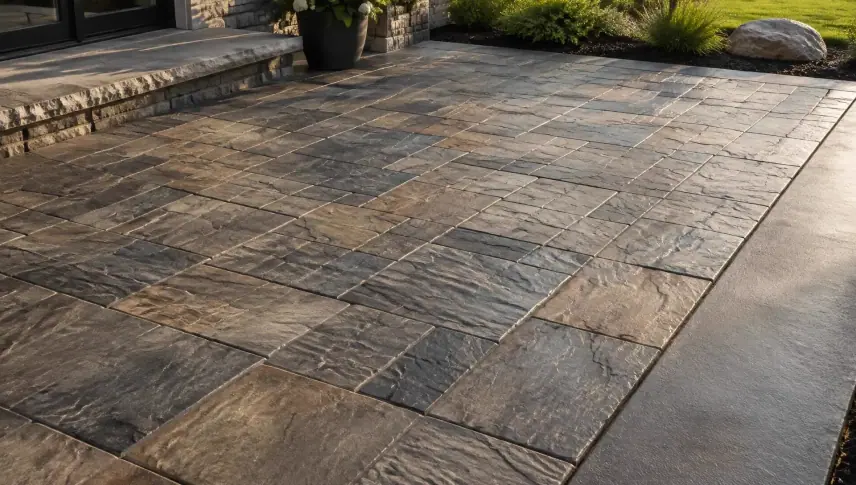
Stamped slate-pattern concrete patio with a smooth border band

Give your outdoor space a finish that belongs

Bring the look of your concrete into the design of your property. Baltimore’s Concrete offers decorative options for patios, walks and other suitable areas, helping you compare the finish you like with the way the space will be used.

A decorative finish needs to work beyond the first impression. Compare stamped patterns, integral color and exposed aggregate against the surrounding brick, the amount of foot traffic and the maintenance you want to take on. If you already have a slab, its condition also determines whether resurfacing is a suitable way to achieve the change.
Plan your decorative concrete project.

Describe the area, the look you want and whether the concrete is new or existing. Your preferred colors, texture and everyday use help narrow the options to discuss.

Your decorative concrete options

Stamped concrete adds a defined pattern, colored concrete changes the tone, and exposed aggregate creates a different surface texture. Share reference images and the surrounding brick, siding or landscaping so the discussion starts with your property.

A new pour gives you choices in layout as well as finish. Concrete resurfacing may be an option for a suitable existing slab, while movement, settlement or deeper damage can make concrete repair or replacement a separate part of the job.

Tell us whether the area will serve as a dining space, a walking route or another outdoor surface. Texture, water movement, cleaning and maintenance deserve a place in the decision alongside color and pattern.

Compare pattern with the look of your property

Stamped concrete in Baltimore is often the first thing homeowners picture when they think decorative, because a single pour can mimic brick, flagstone, or cobblestone with a patterned surface. Compare it for patios and walkways where a consistent, repeatable pattern suits the space, alongside the preparation and upkeep each option needs.

The tradeoff is that stamping has to happen while the concrete is still plastic, which puts real pressure on timing, crew size, and weather cooperation during the pour.

Choose color and texture as separate decisions

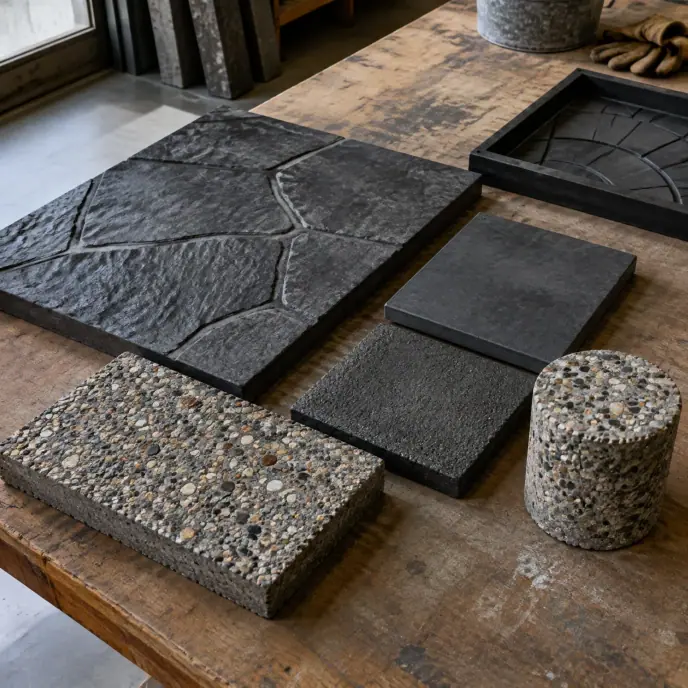
Color and exposed aggregate are sometimes treated as one choice, but they solve different problems. Colored concrete changes the visual tone of a surface without changing its texture, which suits owners who want a warmer look but a smooth, easy-to-sweep surface. Exposed aggregate changes both the look and the texture, trading some smoothness for a stone-flecked surface whose texture, sealer and suitability need to be considered for the intended route.

Combining both is possible, but it adds planning steps: color has to be matched to the aggregate that will eventually show through, and the depth of exposure has to be controlled so the stone reads clearly without the slab feeling rough underfoot.

Decide whether to resurface or start fresh

Not every decorative upgrade requires demolition. Concrete resurfacing can refresh a structurally sound slab that has only surface-level wear, cosmetic cracking, or dated color. It will not fix a slab that has settled, heaved, or cracked through its full depth, so an honest look at the existing concrete has to come before choosing an overlay system.

Decorative concrete finish samples on a workshop table
Your project, your next step

Choose a finish that connects the concrete to the look and everyday use of your property.

Understand the stages of a decorative installation

A typical decorative concrete project moves from site evaluation and utility locates, through forming and base preparation, to the pour or overlay application, and finally to the finishing step that applies the chosen pattern, color, or exposure. Sealing usually follows once the surface has cured enough to accept it.

Each of those stages depends on the one before it, which is why skipping base preparation to save time on a stamped or colored job tends to show up later as cracking or uneven settling that the decorative finish cannot hide.

Include maintenance in your finish choice

Decorative concrete holds up over years of Baltimore winters and summers, but it needs periodic attention: resealing stamped and colored surfaces on a schedule, keeping exposed aggregate clear of ground-in grit, and addressing any new cracking promptly before it widens. Maintenance expectations should be part of the initial conversation, not an afterthought once the project is finished.

Check project approvals before finalizing the design

Some Baltimore neighborhoods, particularly those with historic district overlays or active community associations, have opinions about what a visible decorative surface should look like from the street. A front walkway or porch landing that faces a public sidewalk may fall under design review in a historic district, which can affect which colors or patterns are acceptable before a permit is issued.

Checking these requirements early, before material orders go in, avoids the cost of reordering stamp mats, aggregate, or color hardener because a chosen finish doesn't match what a historic review board or association guideline allows for a street-facing surface.

Your decorative concrete estimate: what changes the scope

Decorative pricing changes with the surface area, preparation and amount of detail. Pattern complexity, borders, multiple colors and access can affect the work beyond a plain finish. For an existing slab, condition and required repairs also matter. Compare a specified finish and preparation scope so an inexpensive surface treatment is not mistaken for the same project as a new decorative installation.

Request an estimate for decorative concrete in Baltimore

Talk with Baltimore’s Concrete about the appearance and practical use you want from the area. Your project location, approximate size and preferred finish give the conversation a clear starting point.

Make your next step count

Planning decorative concrete

Share the look you want, compare suitable finishes for the existing or proposed surface, and confirm the preparation and maintenance considerations before choosing the scope.

Details that shape your scope

  1. Is this a new pour, a tear-out and replace, or a resurfacing over existing concrete?

  2. What finish fits the use of the space: pattern, color, texture, or some combination?

  3. What access does the site allow for material delivery and equipment during the project?

Questions & answers

Choosing a decorative finish

Sometimes, through resurfacing or an overlay, but only if the existing slab is structurally sound; cracked or settled concrete usually needs repair or replacement before a decorative finish is applied over it.

Read: Decide whether to resurface or start fresh

Maintenance depends on the finish, exposure, cleaning and sealer system. Compare the proposed care instructions and resealing requirements with a plain finish before choosing; maintenance costs are specific to the surface and products.

Texture, sealing, wear and wet conditions all affect traction. Compare the proposed finish and sealer for the intended use rather than assuming a decorative pattern alone makes a surface suitable for a wet area.

Deicing chemicals can contribute to scaling and surface wear, particularly on young concrete. Follow the concrete and sealer care instructions and discuss winter maintenance before choosing the finish; sealing does not make concrete immune to salt damage.

Start your project

Request a decorative concrete estimate.

Discuss the look you want with Baltimore’s Concrete, from stamped patterns to color and exposed aggregate.