Repair · Baltimore, MD

Concrete Leveling in Baltimore

Concerned about settled or uneven panels? Discuss concrete leveling with Baltimore’s Concrete, including where the surface has moved and whether lifting is appropriate for the underlying condition.

How this service can help
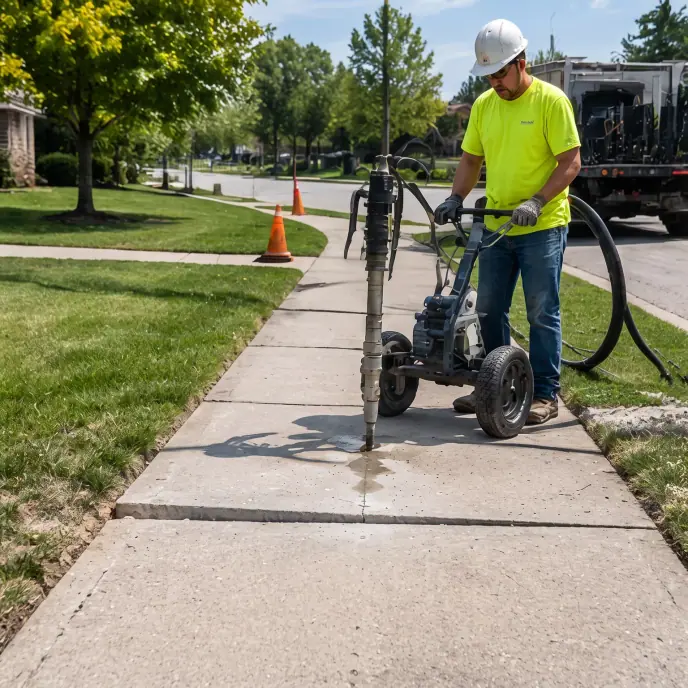
Slab lifting equipment positioned beside a sidewalk

Discuss a better level for a settled slab

Get a clearer option for sunken concrete with Baltimore’s Concrete. Concrete leveling and slab lifting may suit some panels that remain in usable condition, with the condition and surrounding water movement considered together.

Record where the height difference occurs and what connects to the affected panel. A doorstep, garage opening or neighboring slab can limit the desired finished position. Photos of the whole area, together with any cracking or water problems, help frame whether lifting is worth considering or whether replacing the concrete would address more of the condition.
Get started on your concrete repair.

Describe the cracks, uneven areas or surface damage, and where they occur. Mention standing water or previous repairs so you can discuss options for the actual condition.

Your concrete leveling options

Include side views of the settled panels and photos of the adjoining surfaces. Tell us how the change affects walking, parking or drainage so the discussion focuses on the result you need.

Concrete replacement may be more appropriate when a slab is badly deteriorated or the existing layout needs to change. Discuss those limits before treating leveling as the answer to every uneven surface.

Water movement, support beneath the slab and nearby conditions can influence the decision. Share previous repairs and recurring problems so the proposed scope is not based only on the visible change in height.

Understand the proposed leveling method

Across the industry, slabs are usually lifted either with a cement-based slurry pumped beneath the slab or with an expanding injected foam. The two materials behave differently in weight, cure speed, and how they fill larger voids, and whether either suits your slab is something to confirm during the site evaluation rather than assume in advance.

The right method depends on the size of the void, the slab's access points for injection, and how quickly the area needs to return to use.

Find out whether the slab is a suitable candidate

Not every settled slab is a good leveling candidate. A slab with extensive cracking, broken edges, or multiple separate sections moving independently may not lift evenly or may crack further during the process. An evaluation needs to confirm the slab is a single intact piece, or close to it, before recommending leveling over replacement.

Probing beneath the slab, where access allows, also helps confirm the size and shape of the void so the lifting method can be matched to it correctly.

Include access beneath and around the slab

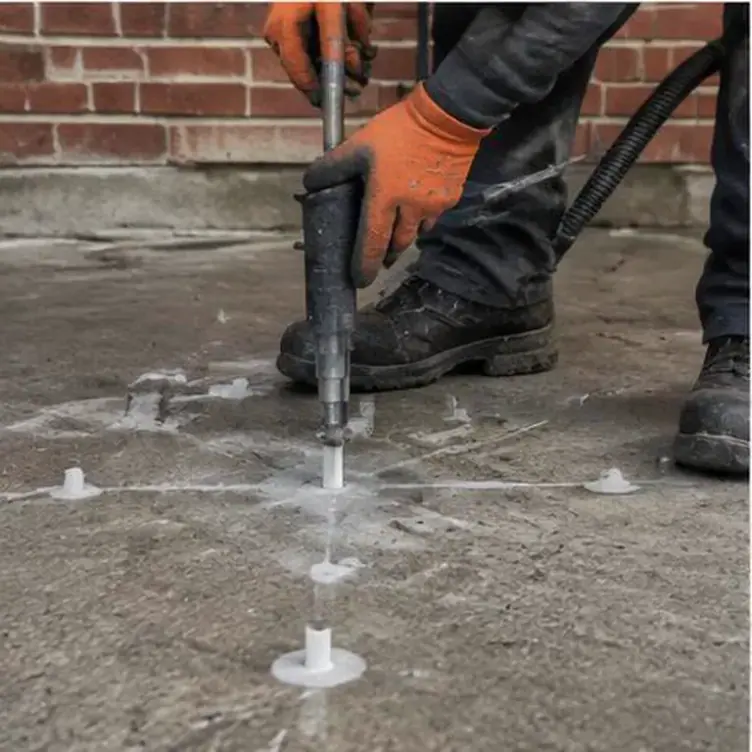
Leveling requires drilling small holes into the slab to inject material underneath, and the pattern of holes depends on the slab's shape and the location of the void. On a rowhouse patio or walkway, limited equipment access through a side yard or alley doesn't usually prevent leveling work, since the equipment involved is smaller than what's needed for a full replacement pour, but it still needs to be accounted for in scheduling.

Concrete leveling equipment beside a settled sidewalk panel
Your project, your next step

Discuss whether a settled, otherwise usable slab is a candidate for leveling.

Know what to expect from injection-hole repairs

After lifting, the small holes drilled for injection are patched with a matching concrete or mortar fill, which is generally visible as small spots on the surface but doesn't affect the slab's function. Some unevenness in color between the patch and the surrounding aged concrete should be expected.

Check drainage after changing slab levels

Leveling corrects the slab's position but doesn't automatically fix whatever caused the original settlement, so it's worth looking at grading and drainage around the area once the slab is lifted. If water was pooling against the slab before, it's likely to keep doing so unless the surrounding grade is adjusted at the same time.

Discuss the conditions that could cause further movement

A properly filled void, combined with improved drainage around the slab, generally holds for years, but leveling doesn't change the soil conditions under the entire property. If the underlying soil continues to lose material from ongoing drainage problems elsewhere, a different section of the same slab or a neighboring one could settle again over time.

Your concrete leveling estimate: what changes the scope

Leveling estimates depend on the affected area, the movement required, access and the conditions beneath the slab. Cracks or deterioration may limit what can be retained, while drainage requirements can affect the target elevation. Compare the proposed result, method and remaining visible repairs with replacement. The area alone does not establish whether leveling is an appropriate or lower-cost choice.

Request an estimate for concrete leveling in Baltimore

Contact Baltimore’s Concrete with the address, photos and approximate affected area. Identify where the slab needs to meet adjoining paving and what you need to improve about access or drainage.

Cracking

Settlement

Spalling

Failed patches

Surface deterioration

Outcome A

Repair may make sense

  • Damage is limited to isolated areas
  • The slab is still well supported underneath
  • The cause has been found and can be corrected
  • The surface still sits at a usable grade

Outcome B

Replacement may make sense

  • Cracking or settlement runs across the whole surface
  • The base has washed out or lost support
  • Earlier patches keep failing
  • The grade or drainage needs to change

The right call depends on what an on-site look at the concrete and the ground beneath it shows.

Make your next step count

Planning concrete leveling

Show the settled panels and adjoining levels, discuss the condition of the slab, and compare leveling with replacement before choosing the affected scope.

Details that shape your scope

  1. Is the slab a single intact section or is it cracked into multiple pieces?

  2. What likely caused the void beneath the slab: drainage, soil type, or erosion?

  3. Which lifting method suits the access and size of the affected area?

Questions & answers

Leveling questions

Compare job-specific estimates for lifting and replacement. An intact settled slab may be a candidate for leveling, while broken panels, unsuitable support or drainage problems can change the scope and the value of retaining the existing concrete.

Timing depends on the area, access, method and conditions being addressed. Ask for the proposed work duration and return-to-use instructions for your project; a general completion time does not establish when the surface can carry its intended loads.

Minor cracking doesn't necessarily rule out leveling, but a slab with extensive or structural cracking may not lift evenly and could be a better candidate for replacement.

Leveling fixes the current unevenness but doesn't guarantee against future settlement unless the underlying drainage or soil issue that caused it is also addressed.

Read: Discuss the conditions that could cause further movement

Start your project

Request a concrete repair estimate.

Discuss the damage with Baltimore’s Concrete and compare repair, leveling or replacement for the condition of your surface.