Commercial · Baltimore, MD

Concrete Curbs & Gutters in Baltimore

Define vehicle areas and plan where surface water goes. Baltimore’s Concrete offers curb and gutter work for commercial site layouts and drainage-related improvements.

How this service can help
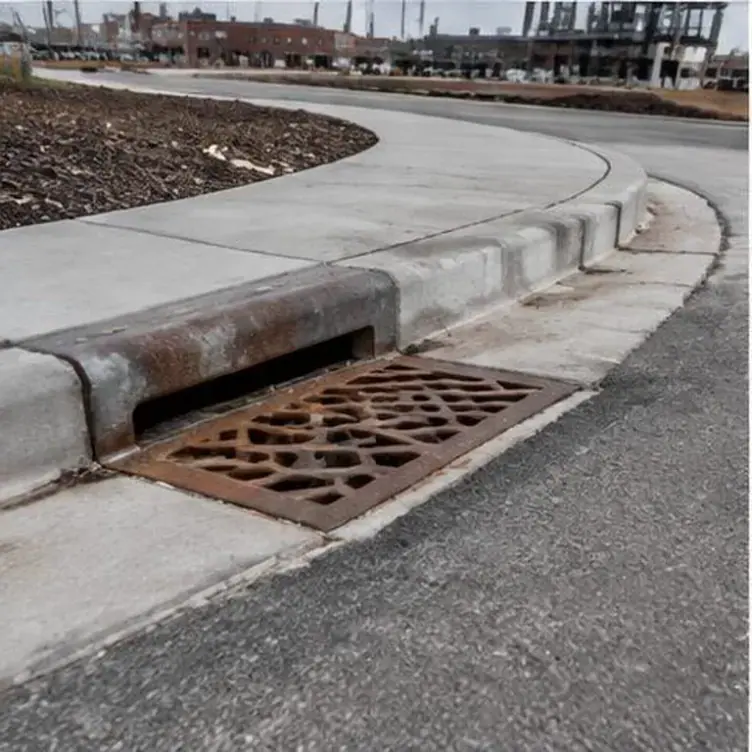
Concrete curb and gutter leading to a storm drain

Define pavement edges and water flow together

Curbs and gutters do more than outline a parking area. Baltimore’s Concrete offers concrete curbs and gutters for projects where pavement boundaries, drainage and access need to work together.

Trace the edge and drainage route that need attention. Curbs and gutters connect to pavement, entrances and collection points, so a replacement section must work with more than the concrete immediately beside it. Provide plans or photos of the affected run and its connections to clarify the boundaries and intended water path.
Bring us your commercial concrete scope.

Describe the intended use, project size and access requirements. Mention operating hours, other trades and scheduling constraints that the proposed scope needs to account for.

Your concrete curbs gutters options

A parking boundary, driveway entrance and drainage run may need different profiles and transitions. Supply the plans or intended layout so the estimate reflects the specific details rather than a single assumed curb type.

Current pavement, drainage inlets and low points influence how the new work should meet the site. Include these connections in the scope discussion so the concrete is considered as part of the wider surface layout.

Replacing a damaged section may affect nearby pavement or an active entrance. Mark the intended removal boundaries and find any route that needs to remain available while the work takes place.

Identify the curb profiles your property needs

Common profiles include vertical barrier curb, mountable or rolled curb, and combined curb and gutter. Barrier curb discourages vehicles from leaving the pavement, mountable curb allows occasional crossings at driveways and islands, and the combined section handles both edge definition and drainage in one piece. Local road agencies publish standard details for curbs within public streets.

Matching the current profile matters when only a section is being replaced, since a mismatch creates both a visual seam and an uneven flow line.

Set the flow line and drainage connections

The gutter flow line is the low path water follows. Even a slight high spot creates a puddle that freezes and loosens the joint between gutter and pavement. String lines or laser layout set the slope toward inlets before forms are placed, and current inlet elevations govern how the new gutter ties in.

Where inlets have settled or frames are broken, repairing them alongside the curb and gutter is usually the only way to make the drainage work again.

Include curb openings and ramp transitions

Where sidewalks meet driveways or crosswalks, curbs drop to create a smooth transition. Accessible curb ramps must meet slope, width, landing, and detectable warning needs. Getting those transitions right takes careful layout, since they combine several slopes in a small area.

Curb work in a public street frequently requires permits and inspection by the local transportation or public works agency before and after placement.

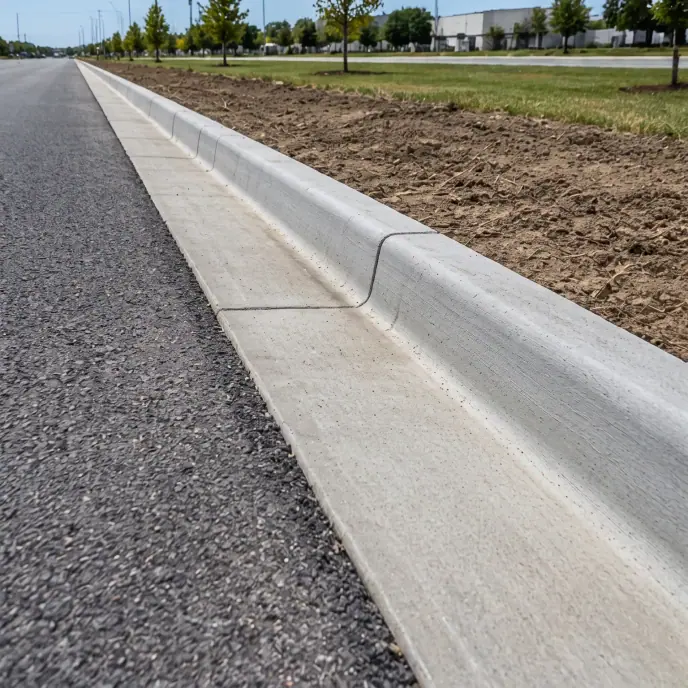
New concrete curb and gutter beside a roadway
Your project, your next step

Connect pavement edges and drainage details in the same curb and gutter scope.

Consider turning vehicles and edge damage

Snowplows and heavy vehicles making tight turns are the main causes of curb damage on business sites. Radii sized for the vehicles that actually use the site, reinforcement at vulnerable corners, and clear reflective marking reduce repeated impacts. Some owners add bollards at the most frequently struck corners.

Define replacement limits beside retained paving

Removal starts with saw cutting along the pavement edge to keep demolition from spreading into good asphalt or concrete. After the new curb cures, the pavement strip beside it is patched to seal the joint. Rushing that patch or leaving a gap invites water into the base along the entire run.

Landscaping, irrigation lines, and sign posts behind curbs also need protection or relocation during the work.

Connect islands, medians and parking edges

Inside private lots, curbs shape landscape islands, separate drive aisles, and guide traffic around buildings. Their radii should suit the delivery trucks and fire apparatus that actually circulate on the site. Tight corners get clipped repeatedly, while overly generous ones waste parking. Reviewing truck turning paths before forming saves a lot of future repair.

Island curbs also hold soil and mulch, so weep openings or drainage paths keep irrigation water from washing landscaping material onto the pavement after every storm.

Your concrete curbs gutters estimate: what changes the scope

Curb and gutter estimates change with length, profile, removal and the condition of adjoining pavement. Openings, returns, islands and drainage transitions add detail beyond a straight run. Clarify replacement limits, pavement restoration responsibilities and access needs. Comparable proposals need the same profiles and connections, not simply the same total number of linear feet.

Request an estimate for concrete curbs gutters in Baltimore

Contact Baltimore’s Concrete with the address, approximate lengths and photos of the affected edges. Include any drawings, drainage needs or related concrete parking lot work you want considered.

Make your next step count

Planning concrete curbs gutters

Find curb profiles and lengths, confirm pavement and drainage connections, and define removal limits and access needs for the affected edges.

Details that shape your scope

  1. Is any curb along a public street?

  2. Which profile matches the current curb?

  3. Where do plows or trucks hit the curb?

Questions & answers

Curb and gutter questions

Private lot curbs may not, but curbs along public streets usually need permits and inspections from the local agency. Needs vary by jurisdiction.

Settlement, high spots, or a raised inlet interrupt the flow line. Correcting the slope and inlet elevation during replacement resolves it.

Read: Set the flow line and drainage connections

Yes, sections can be saw-cut and replaced to match the current profile and flow line.

Barrier curb has a more vertical face, while mountable profiles use a sloped face for their intended crossings. The required profile follows the site or road-agency design; a curb is not automatically a vehicle-restraint barrier.

Start your project

Request a commercial concrete estimate.

Discuss your property’s concrete needs with Baltimore’s Concrete, including the space, access and intended use.