Repair · Baltimore, MD

Concrete Repair in Baltimore

Damaged or uneven concrete? Start with the right repair decision. Baltimore’s Concrete offers leveling, replacement and removal options so you can discuss the condition of your surface before choosing the work.

How this service can help
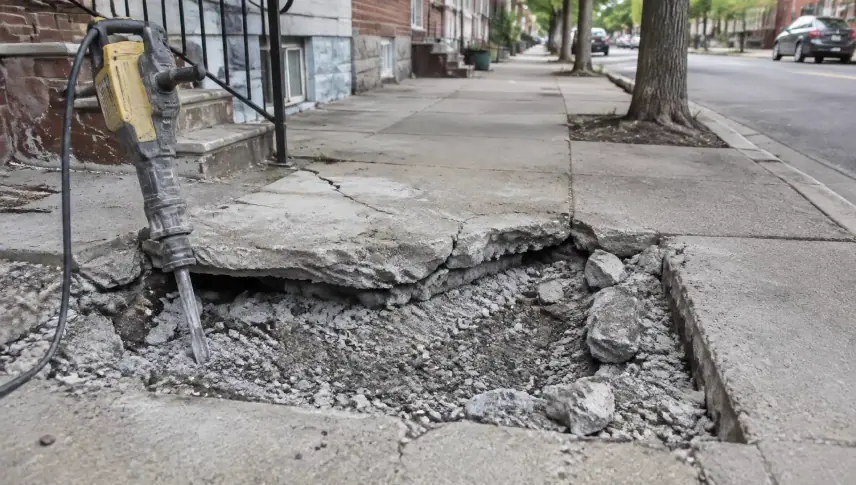
Cracked sidewalk slab broken out to the base for replacement

Get help with the concrete that is causing problems

Cracks, loose edges and uneven panels can make an otherwise useful area difficult to live with. Baltimore’s Concrete offers repair, leveling, removal and replacement options so you can address the condition in front of you.

Start with what has changed: a spreading crack, a trip at a joint, standing water or a surface that is breaking down. Photos of the surrounding area and a description of when the problem appeared help frame the discussion. The aim is to compare a targeted repair with leveling or replacement where the condition calls for a different response.
Get started on your concrete repair.

Describe the cracks, uneven areas or surface damage, and where they occur. Mention standing water or previous repairs so you can discuss options for the actual condition.

Your concrete repair options

Tell us where the surface is cracked, flaking, rocking or holding water. Photos showing the whole area and the change in level help distinguish a surface issue from a slab that has lost support.

Concrete leveling may suit some settled panels that remain in usable condition. Concrete resurfacing addresses suitable surface wear, while concrete replacement may be the better discussion when deterioration or movement affects the slab more deeply.

A repair needs context: adjoining steps, downspouts, tree roots, traffic and ground levels can all matter. Share recurring problems and previous repairs so the proposed work is based on more than the most visible crack.

Look beyond the most visible damage

Concrete repair in Baltimore usually starts with figuring out why the concrete failed, not just what it looks like now. A hairline crack from shrinkage during curing means something different than a wide crack that has shifted vertically, and a surface that is flaking and pitting points to a different cause than a slab that has sunk at one corner.

Patching a crack without finding why it formed usually means it comes back. A crack from ongoing settlement, for example, keeps opening until the support underneath is fixed.

Separate cracks, settlement and surface deterioration

Cracking refers to a break in the concrete's surface, which can range from cosmetic shrinkage cracks to structural cracks that indicate movement. Settlement is when a section of slab has physically sunk relative to its surroundings, usually from erosion or compaction of the base material beneath it. Spalling is surface deterioration, flaking, pitting, or chipping, often tied to freeze-thaw cycling or salt exposure rather than movement underneath the slab.

These three problems sometimes occur together, and distinguishing them is the first step toward choosing between leveling, patching, partial replacement, or full removal and replacement.

Plan repairs around confined access

On rowhouse blocks, a backyard repair may only be reachable through the alley, and a sidewalk repair may need approval because it sits in the public way. Both affect how and when the work can be staged.

Repairs that dig under a slab, such as rebuilding a sunken section, need utility locates first. On older blocks, service lines can be shallow or run in unexpected places.

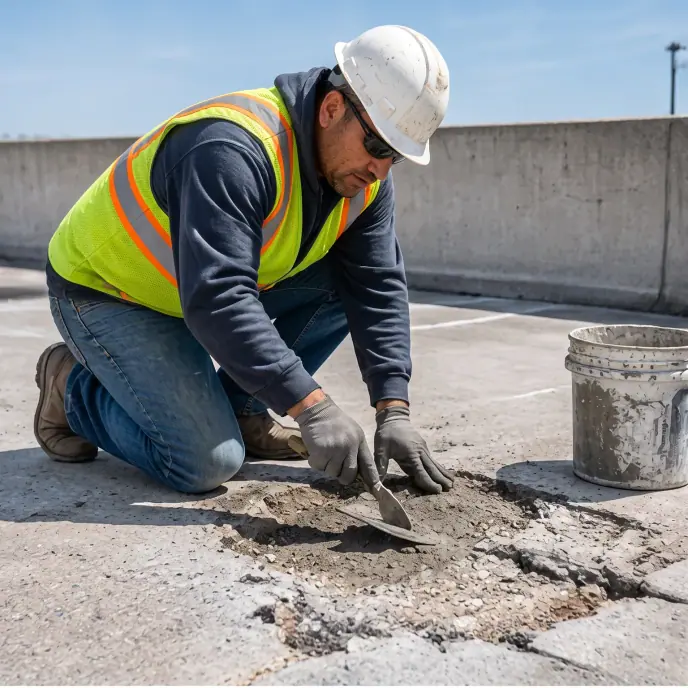
Worker repairing a deteriorated section of concrete flatwork
Your project, your next step

Find a practical next step for cracked, worn or uneven concrete without assuming every slab needs replacing.

Match repair options to the condition

Minor surface cracks and small spalled areas can often be patched or filled, which is the least invasive and lowest-cost option when the underlying slab is otherwise sound. Settled slabs that are structurally intact but uneven are candidates for concrete leveling, which raises the slab back to grade without full removal.

More significant damage, cracks running through the full slab depth, large areas of spalling, or sections that have settled unevenly across multiple points, generally calls for partial or full replacement rather than a patch that will only mask the problem temporarily.

Include water movement in the repair discussion

Water pooling against a foundation or collecting in a low spot on a slab is one of the more common reasons repairs fail to hold up. Any repair plan should look at where water goes after it leaves the repaired area, since improving slope and drainage alongside the repair itself reduces the odds of the same damage recurring.

This is especially relevant for Baltimore basements and areaways, where water directed toward a foundation wall can cause problems well beyond the concrete itself.

Know when the problem needs an assessment

Because so many types of concrete damage can look similar on the surface, an in-person evaluation is usually more reliable than trying to diagnose cause and scope from a description or photo alone. A proper evaluation checks the extent of cracking, probes for voids or soft spots beneath the slab, and considers the broader drainage and soil picture around the damaged area.

Your concrete repair estimate: what changes the scope

Repair estimates vary with the damage, the area affected and the preparation required for the proposed method. Several small repairs can involve a different amount of labor from replacing a continuous section. Compare what the repair addresses, what it retains and what limitations remain. Access, drainage concerns and previous repairs should be part of the discussion before choosing a scope.

Request an estimate for concrete repair in Baltimore

Contact Baltimore’s Concrete with your project location, photos and a description of the problem. Tell us how you use the surface and what you need to improve so the conversation can focus on a suitable next step.

Cracking

Settlement

Spalling

Failed patches

Surface deterioration

Outcome A

Repair may make sense

  • Damage is limited to isolated areas
  • The slab is still well supported underneath
  • The cause has been found and can be corrected
  • The surface still sits at a usable grade

Outcome B

Replacement may make sense

  • Cracking or settlement runs across the whole surface
  • The base has washed out or lost support
  • Earlier patches keep failing
  • The grade or drainage needs to change

The right call depends on what an on-site look at the concrete and the ground beneath it shows.

Make your next step count

Planning concrete repair

Show the damage and surrounding area, compare repair with leveling or replacement where relevant, and define the affected sections before agreeing on the work.

Details that shape your scope

  1. Is the damage a surface issue, a settlement issue, or both?

  2. What is directing water toward or away from the damaged area?

  3. Does the location require coordination through the permitting office, such as a public sidewalk?

Questions & answers

Cracks, settling, and flaking: questions

Hairline cracks with no vertical offset and no change in width over time are often cosmetic, while cracks that are widening, offset vertically, or connected to a sinking section of slab usually indicate a problem worth addressing.

Some repairs can be done in winter, but cold temperatures affect curing times and the reliability of certain patching materials, so an evaluation should confirm the method fits the season.

Not necessarily; patching a crack addresses the visible damage, but if settlement, drainage, or soil movement caused it, that underlying issue needs separate attention or the crack is likely to return.

Read: Look beyond the most visible damage

Who must fix a cracked public sidewalk depends on the address and current local rules. Check that before you budget, because the answer changes whether a repair is yours to schedule at all.

Start your project

Request a concrete repair estimate.

Discuss the damage with Baltimore’s Concrete and compare repair, leveling or replacement for the condition of your surface.