Driveways · Baltimore, MD

Concrete Driveway Contractor in Baltimore

Ready for a driveway that better fits your parking needs? Discuss a new concrete driveway with Baltimore’s Concrete, including vehicle access, available space and the finish you want.

How this service can help
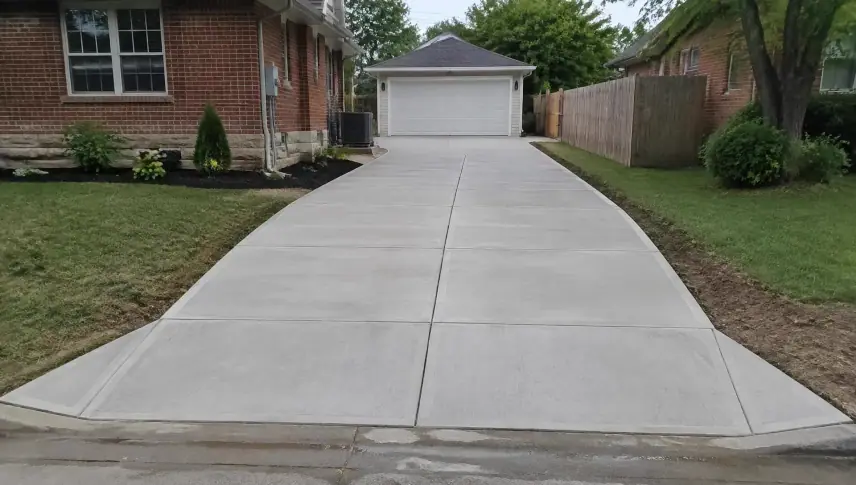
Jointed concrete driveway leading to a detached garage

Make your driveway work better for everyday parking

Give your vehicles a concrete parking area that fits your property. Baltimore’s Concrete offers driveway installation in Baltimore City and County, with layout, access and the connections to your home at the center of the discussion.

Think beyond the rectangle in front of the garage. Turning room, the route to your front door and the connection to the street all affect how useful the driveway feels every day. Tell us which vehicles need to fit and where the present layout falls short, so your estimate can address the access you actually need.
Request an estimate for your home.

Tell us which area you want to improve, its approximate size and how you use it. Include access restrictions or drainage concerns so the conversation starts with your property's needs.

Your concrete driveways options

Tell us how many vehicles use the area, how they turn and where the driveway meets the garage or alley. A concrete parking pad may suit a smaller area, while a new driveway can change more of the approach.

If a driveway is already in place, compare driveway repair with driveway replacement before choosing a new installation scope. Describe widespread damage, uneven panels and any parts you want to retain.

The estimate discussion needs more than the visible concrete dimensions. Bring drainage concerns, ground levels and access restrictions into the scope alongside removal, base preparation, finish and the transitions to existing paving.

An alley-access space may suit a concrete parking pad rather than a driveway extending across the property. Compare the approach, maneuvering room and walking connection to the house before deciding which layout to request.

Connect your driveway to the street and garage

The apron, where a driveway meets the public sidewalk, alley, or street, takes more abuse than almost any other section because it absorbs the transition between two different grades and often the full turning force of a vehicle. Getting that transition right requires coordinating with the existing public pavement rather than treating the driveway as an isolated project.

For rear-loading rowhouse properties, the alley connection is frequently the trickiest part of the layout, since alley grades were not always built with a specific driveway in mind and may need adjustment to avoid a dip or a hump at the property line.

Include the base beneath your new driveway

Once old concrete or asphalt is removed, the exposed subgrade needs to be evaluated honestly. Soft spots, old fill, tree roots, or standing water in the excavation are all signs that more preparation is needed before gravel base goes down, and skipping that step is one of the more common reasons a new driveway fails early.

Compaction of the base layer in controlled lifts, rather than dumping and leveling in one pass, gives the new concrete a stable platform that resists the freeze-thaw movement that affects so much of the region's older concrete.

Plan joints as part of the finished layout

Control joints are placed to tell the concrete where to crack as it shrinks during curing, rather than leaving that to chance. On a driveway, joint spacing has to account for slab width, thickness, and the turning pattern of vehicles, since a joint placed in the wrong spot can still end up with an unplanned crack running through it.

Expansion joints at the garage, the street, and any adjoining walk allow the slab to move slightly with temperature changes without transferring stress into neighboring structures.

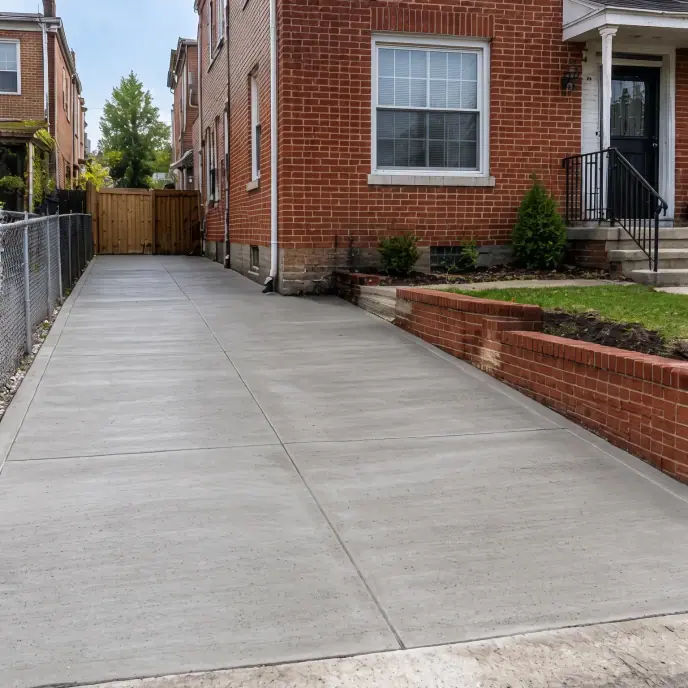
Finished concrete driveway beside a brick home
Your project, your next step

Create a driveway layout that fits your vehicles, your entrance and the space you have.

Keep driveway drainage in the scope

A driveway that slopes the wrong way, even slightly, will carry water toward a garage, foundation, or basement window well instead of away from it. Establishing the correct slope before forms go in is far easier than correcting it after the concrete has cured.

Downspouts discharging near or onto the driveway surface need to be accounted for in the grading plan, since a driveway that looks fine in dry weather can still develop ice patches in winter if runoff crosses it at a low point.

Choose a practical outdoor driveway finish

A broom finish is the standard choice for driveways because it gives tires and foot traffic grip in wet or icy conditions, which matters more on a sloped Baltimore driveway than it might on a flat patio. Smoother finishes look appealing but can become slick with frost or rain.

Curing time and weather both affect how a finish sets up, and placing concrete during extreme heat or ahead of a hard freeze requires adjustments to protect the surface while it gains strength.

Specify concrete for the vehicles you use

Driveway concrete needs a specification for its actual use and exposure, including vehicle loads and outdoor freeze-thaw conditions. An appropriately specified air-entrained mix is one measure used to reduce freeze-thaw scaling risk, together with finishing, curing and drainage suited to the exposure. Air entrainment creates microscopic air pockets throughout the concrete that give water room to expand when it freezes, rather than pushing against the surrounding material and cracking it from within.

Reinforcement decisions follow the same logic. A driveway carrying only occasional passenger vehicle traffic may need less steel than one that regularly sees a loaded pickup, a trailer, or a larger SUV parked in the same spot for hours at a time. Wire mesh placed too low in the slab, or left sitting on the subgrade instead of held up during the pour, does little to control cracking, so proper placement during forming matters as much as the decision to include it. Getting the mix design and reinforcement matched to actual use, rather than defaulting to a one-size answer, is part of what keeps a new driveway performing well for years rather than developing surface problems after it is put into use.

Your concrete driveways estimate: what changes the scope

Driveway pricing changes with the area, existing surface removal, excavation and base preparation, access for placement, reinforcement requirements and chosen finish. A wider parking area or a changed garage connection can add work beyond a like-for-like slab. Ask what the proposal includes at the street, sidewalk and garage so the total scope is clear before you compare prices.

Request an estimate for concrete driveways in Baltimore

Tell Baltimore’s Concrete what you want to improve about your parking or entrance. Have the project address, approximate driveway size and photos ready, and identify any changes you want to make to the current layout.

Make your next step count

Planning concrete driveways

Describe your parking needs, compare retaining or replacing existing concrete, and confirm the layout, drainage interfaces and finish in the driveway scope.

Details that shape your scope

  1. Is your driveway connected to a public street, an alley, or both?

  2. Have you noticed water collecting at any particular spot along the driveway?

  3. Is the current problem isolated to one area, or spread across the whole surface?

Questions & answers

Driveway questions we hear most

It depends on how much of the slab is affected; isolated low spots near the garage can sometimes be addressed with targeted work, but a driveway-wide slope problem usually means the whole surface needs to be repoured to the correct grade.

Read: Keep driveway drainage in the scope

Yes in many cases, but the apron still needs to meet the alley's existing grade cleanly, so that transition area gets evaluated even when the alley pavement itself is left alone.

Concrete needs to reach sufficient strength before it carries vehicle weight, and your contractor should give you a specific timeline based on the mix and weather conditions during your pour.

Roots may affect the proposed layout and excavation. Discuss the tree and any required arborist or local-authority review before planning root removal; replacing the concrete does not guarantee that future movement will stop.

Compare the written scope, including any old concrete removal, base preparation, drainage, reinforcement requirements, finish, joints and access arrangements. Tell Baltimore’s Concrete whether you need a new driveway or replacement, and describe how the parking area is used.

Start your project

Request your driveway estimate.

Talk with Baltimore’s Concrete about a new driveway, repair or replacement, and the parking space you want to improve.